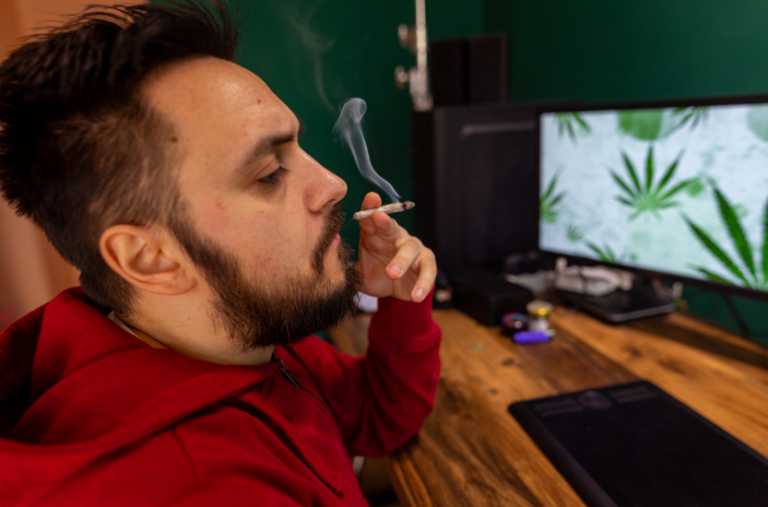
1. Your brain has automated the habit
By the time daily use is established, smoking isn’t a decision — it’s an automated response to cues. Come home, smoke. Stressed, smoke. Evening, smoke. These aren’t conscious choices; they’re habits in the neurological sense: stimulus-response patterns that run without deliberation. Willpower operates too slow to interrupt an automatic response. What you need is to change the cue or the environment, not to summon more willpower.
2. Withdrawal is genuinely uncomfortable
Cannabis withdrawal is real and recognized: insomnia, irritability, anxiety, appetite disruption. The first time you try to quit and hit this wall, it’s easy to conclude “I can’t do this” rather than “I’m in withdrawal and this is temporary.” Knowing the symptoms, their peak, and their end point changes how you interpret them. The timeline matters.
3. Weed is doing something real for you
Managing anxiety, getting to sleep, stepping back from stress, social bonding, creative stimulation — these are real functions cannabis fills for many users. Quitting feels impossible partly because you haven’t figured out what else will fill those functions. Identifying specifically what cannabis is doing for you is essential to replacing it.
4. The evenings are unstructured
Most daily use is concentrated in a specific time window — evenings, late afternoons, before bed. If there’s nothing specific planned for that time, the default is the established habit. Quitting requires consciously filling that slot with something decided in advance, not leaving it empty and hoping willpower fills the gap.
5. Weed is easily accessible
Having cannabis readily available — at home, or easily obtained — means every difficult moment involves an active decision not to smoke. Removing access, at least in the acute withdrawal phase, converts an ongoing daily decision into a single prior one. This is harder to do in legal markets, but still important.
6. You’ve tried and “failed” before
Each previous attempt that ended in smoking again slightly weakens the internal credibility of the next attempt. “I always go back” becomes a self-fulfilling prophecy. What’s actually true is that most people who successfully quit long-term made several attempts first. The previous attempts are data, not evidence of permanent inability.
7. You use weed to manage anxiety — and withdrawal increases anxiety
This is the trap: cannabis temporarily reduces anxiety, but over time it increases baseline anxiety by dysregulating the system. When you quit, the spike in anxiety feels like confirmation that you need weed. It isn’t — it’s withdrawal. The anxiety usually settles well below its pre-quit level after two to three months. Getting through the withdrawal phase is hard when the main symptom looks exactly like the thing you were using to treat. A structured approach to how to stop smoking weed helps here.
8. Your social environment includes cannabis
If the people you spend time with smoke, the social pull adds to the chemical pull. Quitting in a social context where weed is normalized requires either distance from those situations temporarily, or an unusually robust internal commitment. Being around people who are smoking without smoking yourself is genuinely harder than not being there.
9. Motivation fluctuates — and you’re waiting for it to be high
You keep waiting for the moment when you feel motivated enough to stop. That moment often doesn’t come — because the dopamine system affected by daily cannabis use is also the system that generates motivation. Motivation is more reliably an outcome of action than a precondition for it. Setting a quit date and following the structure works better than waiting to feel ready.
10. You haven’t treated the first two weeks as a special phase
Many people try to quit weed while changing nothing about their environment, routine, or social life — and then are surprised when they relapse when a trigger occurs at 9pm on a Thursday. The first two weeks require specific preparation and specific support. Treating them as a normal two weeks that happens to not include weed is how most relapses happen.
For a concrete plan: How to Stop Smoking Weed: 12 Strategies That Actually Work.
FAQ
Is it normal to struggle to quit weed?
Yes. Cannabis use disorder affects around 9% of all users and a much higher proportion of daily users. Difficulty stopping despite wanting to is one of its defining features. The struggle is neurological, not moral.
What is the hardest part of quitting weed?
For most people, either the sleep disruption and irritability of the first week, or the psychological habit in the longer term — especially the evening routine and situational triggers that continue to fire for months. Both are addressable.