

How Your Brain Recovers After Quitting Weed: What the Science Shows
Can You Get Addicted to Weed? What the Science Actually Says
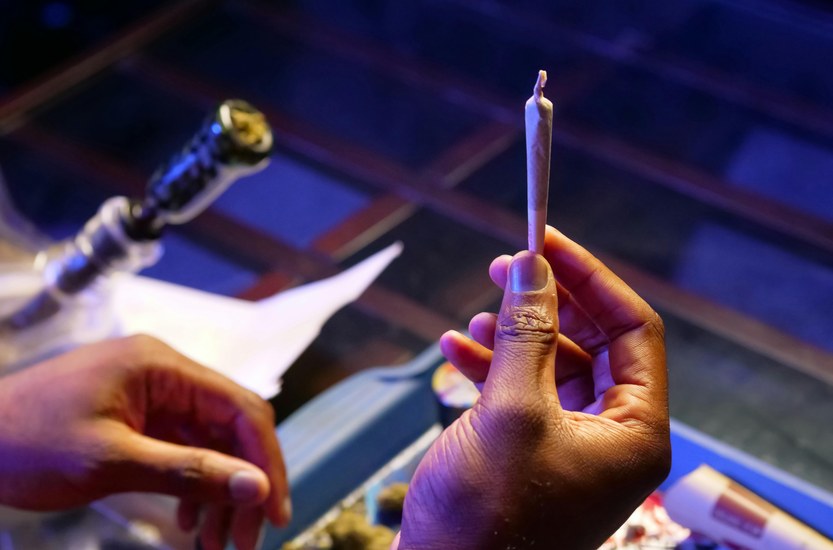
Can you get addicted to weed? The question sounds simple and the answer keeps being dodged, minimized, or buried under qualifiers. So here it is directly: yes. Around 3 in 10 people who use cannabis regularly develop cannabis use disorder. Among daily users, that number climbs significantly higher. This is not a fringe view or anti-cannabis moralizing – it is what the clinical and epidemiological research consistently shows.
What Cannabis Addiction Actually Means
Addiction to cannabis – clinically called cannabis use disorder (CUD) – is defined in the DSM-5, the standard diagnostic manual used by psychiatrists and psychologists. It does not require injections, physical collapse, or rock-bottom moments. What it requires is a pattern of continued use despite clear negative consequences, combined with at least some of the following: increasing tolerance, withdrawal symptoms when stopping, using more than intended, failed attempts to cut back, significant time spent obtaining or recovering from use, and giving up activities that once mattered.
The reason so many people resist the word addiction when it comes to cannabis is partly cultural – weed has long been framed as harmless, especially compared to alcohol or harder drugs – and partly because cannabis addiction tends to develop slowly and quietly, without dramatic turning points. You do not wake up one morning and realize you are dependent. You just realize, at some point, that you have not had a day without it in two years and that the idea of stopping makes you genuinely uneasy.
The Numbers
Research from the CDC and NIDA puts the rate of cannabis use disorder among people who use cannabis at approximately 30%. That means roughly 1 in 3 regular users develops a clinically significant problem with cannabis at some point. Among people who begin using in adolescence – when the developing brain is more vulnerable to all substance effects – the rate is higher.
According to NIDA data, approximately 6.8% of adults in the US met criteria for past-year marijuana use disorder in recent years – that is roughly 19 million people. The highest rates were in adults aged 18-25, where the prevalence reached 16.6%.
These numbers have been rising alongside legalization, commercialization, and most importantly, a steady increase in THC potency. Over the past two decades, average THC concentrations in cannabis products have increased three to five times compared to what was available in the 1990s. Higher potency means faster tolerance development, stronger withdrawal, and a steeper addiction curve.
Why the Brain Gets Hooked
The mechanism is not complicated, even if the terminology makes it sound that way.
Your brain has its own internal cannabis-like system – the endocannabinoid system – that regulates mood, stress, appetite, and sleep using a naturally produced molecule called anandamide. THC mimics anandamide closely enough to fit into the same receptors. The difference is potency and duration: THC is far stronger and stays active far longer.
With regular use, the brain adapts. It produces less anandamide on its own and reduces the number of active receptors, because they are getting flooded by THC. This is tolerance. It also means that when cannabis is not present, the system is running below its natural baseline. That is what causes the flatness, the anxiety, the irritability and sleep disruption people experience when they try to stop. The brain is not just missing the high – it is missing the regulation it outsourced.
Read also: How Daily Cannabis Use Changes the Brain
The Signs People Actually Notice
Clinical criteria are useful, but they are not the same as the real experience. People who develop cannabis use disorder tend to describe it in ways that do not sound like classic addiction language. More like:
You do not smoke to get high anymore. You smoke to feel normal. You have quit several times, sometimes for weeks at a stretch, but always go back – usually with a justification that sounds reasonable but deep down you know is a negotiation. You have noticed it is affecting your motivation, your sleep, your sharpness at work, your patience with people you care about, but you keep putting off taking it seriously. The weed is not giving you much anymore, but the idea of not having it is unsettling in a way you do not fully want to examine.
That is not weakness. That is a learned pattern the brain has made automatic.
Who Is Most at Risk?
Not every cannabis user develops a problem. Several factors meaningfully raise the risk:
Starting young: The earlier you begin, the higher the likelihood of developing dependence. Adolescent brains are still forming, particularly in the prefrontal cortex – the area responsible for impulse control and decision-making. Early use disrupts this development.
Daily or near-daily use: Frequency is the strongest predictor of dependence. Occasional weekend use carries a much lower risk than using every day or multiple times a day.
High-potency products: Concentrates and high-THC flower push tolerance and receptor downregulation faster.
Emotional escape use: Using cannabis primarily to numb stress, anxiety, or emotional pain creates a pattern where the substance becomes necessary for basic emotional regulation. This is a particularly sticky form of dependence because every difficult moment becomes a trigger.
Family history of addiction: Genetic factors increase susceptibility across all substances.
The Problem With Comparison
The most common obstacle to recognizing cannabis addiction is the comparison. It is not heroin. It is not alcohol. People do not lose their jobs over weed – or at least not obviously, not quickly.
The problem with that reasoning is that it compares cannabis to the worst-case versions of other addictions. What cannabis does more quietly, over months and years, is erode. Motivation, memory, sleep quality, emotional range, drive, presence. Most people who have been smoking daily for five or ten years are not in crisis – they are just operating at a fraction of their actual capacity, and they have forgotten what the alternative feels like.
That is not a small thing. It is just a quiet one.
Read also: Why You Can’t Stop Smoking Weed
Frequently Asked Questions
Can you get physically addicted to weed?
Yes. Cannabis produces real physiological dependence with measurable withdrawal symptoms: anxiety, insomnia, irritability, sweating, appetite loss and nausea. It is not as physically dramatic as opioid or alcohol withdrawal, but it is real and often severe enough to drive people back to using.
How many people become addicted to cannabis?
Approximately 30% of regular cannabis users develop cannabis use disorder. Among daily users, estimates are considerably higher, and among those who start in adolescence, the risk is elevated further.
Is cannabis more addictive now than it used to be?
In practice, yes. THC potency has increased three to five times over the past two decades. The higher the THC concentration, the faster tolerance develops and the stronger the dependence.
Can you get addicted to weed if you only smoke on weekends?
The risk is much lower with infrequent use, but not zero. What matters is whether use is escalating, whether you notice discomfort when you skip it, and whether it is becoming more necessary over time. Pattern matters more than frequency alone.
What is the difference between cannabis dependence and addiction?
Dependence means your body has adapted and you experience withdrawal when you stop. Addiction adds the layer of compulsive use despite negative consequences and an inability to reliably stop. The DSM-5 combines both under cannabis use disorder and grades it mild, moderate, or severe depending on how many criteria are met.
Conclusion
The science on cannabis addiction is clear and has been for years. What muddies the water is the gap between clinical language and lived experience, and the cultural narrative that weed is categorically harmless. Both of those things can be true at once: cannabis is less acutely dangerous than many substances and still genuinely addictive for a significant portion of people who use it regularly.
If you recognize the pattern in yourself – using to feel normal, failed attempts to stop, something quietly eroding in the background – that recognition is worth something. It is the first step toward addressing a pattern the brain has been reinforcing for a long time.
Recents Blog
Quitting Weed and Your Social Life: What Nobody Actually Warns You About
How Long Does Insomnia Last After Quitting Weed? What to Expect
The First 7 Days Without Weed: What I Actually Experienced
10 Signs It’s Time to Quit Weed (Even If You Don’t Think So)
Long-Term Effects of Daily Weed Use: What the Research Actually Shows
