
Do Weed Detox Drinks Actually Work? What They Do, What They Do Not
The bottle is on the kitchen counter. Thirty-two ounces, bright label, forty dollars from the smoke shop, and the guy behind the register said "yeah, pass...
Read more »

The short answer
Home THC tests don’t detect THC itself; they detect THC-COOH, a metabolite created when your body breaks down THC. Because THC is fat-soluble, it stores in fatty tissue and releases gradually into your bloodstream over weeks after you stop using. THC-COOH is the breakdown product of that ongoing release.
Most home tests have a cutoff of 20 to 50 ng/ml. A “negative” result means your THC-COOH levels have dropped below that threshold, not that zero THC remains in your body. Levels have simply fallen to a range that test can’t pick up.
This is why the timeline varies so much between people. It’s not just about how long you used; it’s about your body fat percentage, how fast your metabolism processes the stored fat, your hydration levels, and your activity level.
A daily user with low body fat and high metabolism might test clean faster than a weekly user who is heavier and more sedentary.
General timelines based on usage patterns:
Occasional users (a few times per month): about a week to test negative in most cases, often less.
Weekly users: 10 to 14 days typically, though some take three weeks.
Daily users: 3 to 6 weeks is the most common range. Heavy daily users (multiple sessions per day for years) can take two to three months. In one study of chronic users, it took up to 77 days to drop under the cutoff for good.
How long THC-COOH usually stays in urine
| Use before quitting | Usually negative after |
|---|---|
| Occasional use | About a week |
| Weekly use | 10 to 14 days, sometimes 3 weeks |
| Daily use | 3 to 6 weeks |
| Years of heavy daily use | 2 to 3 months |
| Longest documented case | 77 days |
These are averages. Your specific timeline will differ. The only way to know where you personally stand is to test.
Why water, niacin and detox drinks don’t change those numbers is covered in How to Detox From Weed at Home.
For more context on what your body is going through during this period, read: How Long Does It Take to Become THC-Free After Quitting Weed?
Testing every day is the most common mistake. Daily testing during the first week produces nothing but frustration: you’re definitely still positive, and watching a positive result over and over has no motivational value.
It can actually make the early weeks feel longer and harder than they need to.
A more effective approach: start testing around day 10 to 14 if you were a light to moderate user, or day 20 to 25 if you were a heavy daily user. Then test every 5 to 7 days. This gives your metabolism time to make measurable progress between tests, so each result is genuinely informative.
When a very faint second line shows up, that’s a meaningful signal. You’re right around the cutoff of that strip. Test again in 5 to 7 days and you’ll likely see a clearer second line.
Two lines = negative. This surprises many people who expect “two lines = two things detected.” In THC tests, the second line appears when THC-COOH is below the cutoff, because the control mechanism works differently than most other tests.
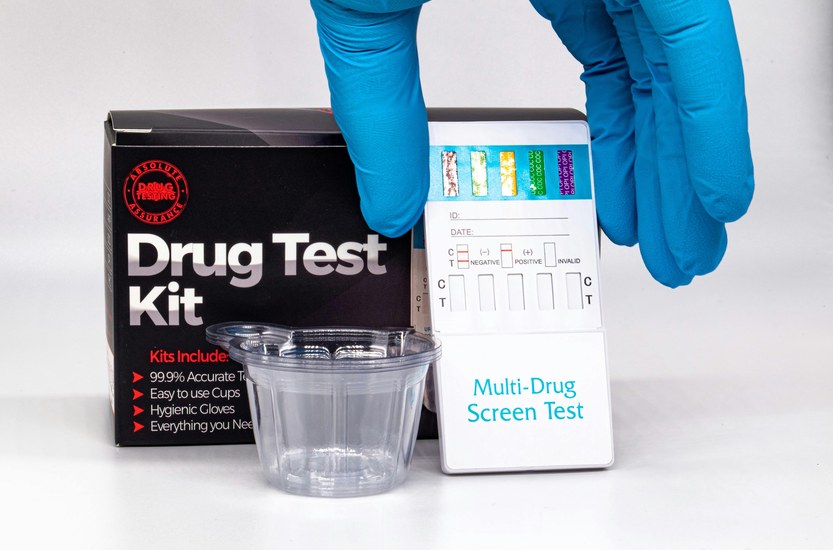
One line = positive. If only the control line (C) shows up and the test area (T) stays empty, THC-COOH is above the cutoff.
A faint second line still counts as negative. Most strip makers say any line in the test area, no matter how faint, should be read as negative. A faint line just tells you you’re close to that strip’s cutoff, so it’s not a guarantee for a lab test with a different cutoff. Test again in a week and watch it get darker.
No control line = invalid test. Redo it with a new strip.
Reading a THC test strip
| What you see | What it means |
|---|---|
| Only the control line (C) | Positive, above the cutoff |
| C and a clear test line (T) | Negative, below the cutoff |
| C and a faint test line (T) | Negative, but close to the cutoff |
| No control line | Invalid, the strip didn’t work |
Watching that second line show up and get stronger is the point where testing starts to feel worth it.

Free E-Book
You want to quit weed, but it feels impossible to actually stop?
Our free e-book shows you why willpower is a lie and the exact steps you need to quit for good. Enter your email below and we’ll send it to you for free.
Beyond the practical information, home testing has genuine motivational value that’s easy to underestimate. Withdrawal progress is mostly invisible: you can’t see your brain chemistry recalibrating.
A drug test gives you a concrete, visible marker of physical progress. Watching the second line get darker over successive tests week by week is one of the few ways to see the detox actually happening.
This is why many people who test at home report it helps them stay quit. The progress is real, and seeing it matters psychologically, especially during the weeks when you still don’t feel good and the internal changes are invisible.
For more on the full physical picture of what’s changing in your body, read: Weed Withdrawal Timeline: Day-by-Day Guide for Heavy Users
Home tests are accurate enough for personal tracking. For official purposes (employment drug testing, legal matters, medical clearance), laboratory urine analysis is required. Home tests use the same immunoassay method as many lab screenings, but lab confirmation is more precise and legally defensible.
If you’re testing for an upcoming job test or legal requirement, add a buffer. Testing negative at home several days before the deadline gives you reasonable confidence, but testing negative the day before is cutting it close given normal biological variation.
Knowing when you’ll test clean is one of the most practical questions in cannabis detox, and the answer is genuinely personal. The timelines are real, but they’re ranges: your specific experience depends on years of use, body composition, and metabolism.
What consistent testing gives you is real-time information about your own body’s progress, plus the psychological reinforcement of watching that progress happen visibly week by week. Both are worth more than most people expect.
If you want structured support to actually get through detox and withdrawal, our Cannabis Detox Program covers the complete path from day one to clean.

About the author
Sabrina S. · Health Coach, QSW Team
Sabrina is the health coach of the QSW team. Like everyone on the team, Sabrina knows cannabis from personal experience and covers what your body goes through when you quit: sleep, sweating, appetite and recovery.
More about Sabrina →The bottle is on the kitchen counter. Thirty-two ounces, bright label, forty dollars from the smoke shop, and the guy behind the register said "yeah, pass...
Read more »
Supplements won't do the work of quitting for you, and they won't eliminate withdrawal. But some of them do make specific symptoms meaningfully easier to get…
Read more »
CBD has become one of the most talked-about tools for quitting weed, and the conversation ranges from "it completely eliminated my cravings" to "it did…
Read more »