
How to Detox From Weed at Home: What Actually Speeds It Up (and What Does Not)
It's Sunday night. The offer letter came Friday, the screening is Wednesday, and you've had the same tab open for an hour: how to detox from...
Read more »



The short answer
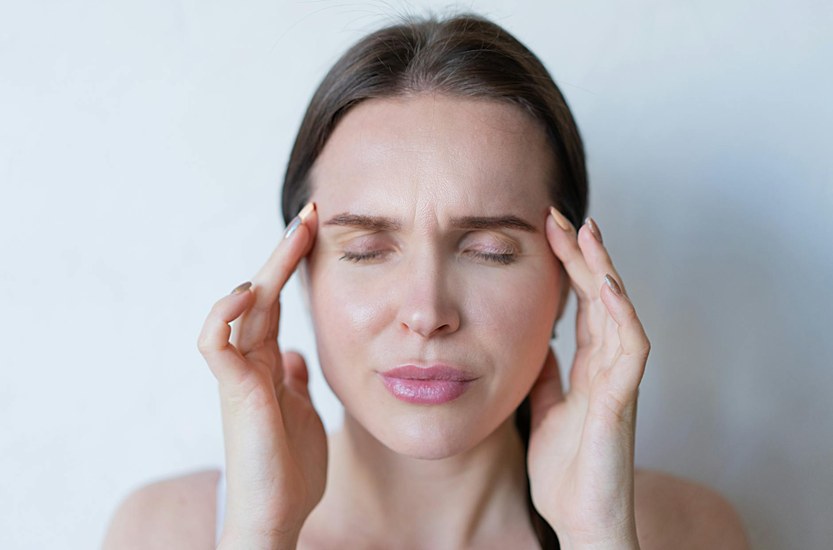
Withdrawal headaches rarely have just one cause. Usually two or three things stack up at the same time, which is why one fix alone sometimes isn’t enough.
The four usual causes at a glance
| Cause | What it feels like | When it’s strongest |
|---|---|---|
| Blood vessels readjusting | Dull pressure across the forehead and behind the eyes | Days 4 to 6 |
| Tension | A tight band around the head | While anxiety is high, mostly week one |
| Too little water | Pressure that builds over the day | When you eat and drink less, mostly week one |
| Too little sleep | A heavy, dull head after a bad night | As long as your sleep stays broken |
Blood vessels readjusting. THC acts on your heart and blood vessels. It raises your heart rate right after use and widens some blood vessels, which is why your eyes turn red. NIDA lists headaches among the cannabis withdrawal symptoms.
When you stop, your blood vessels and blood flow adjust back. That’s the likely reason for a headache that feels a lot like caffeine withdrawal: a dull pressure that just sits there.
Tension from a wound-up nervous system. Your nervous system runs hot during withdrawal. Anxiety and restlessness make you tense up, and tension headaches follow, the band-around-the-forehead kind.
This lasts as long as the anxious part of withdrawal lasts. That’s why the headaches often ease as the first week goes on.
Dehydration. Hunger and thirst signals get scrambled in withdrawal. Many people eat and drink a lot less in the first week without noticing.
Even mild dehydration is one of the most underrated headache triggers. In withdrawal, it stacks on top of everything else.
Too little sleep. If you’re getting three to five broken hours and waking up several times a night, headaches are one of the predictable results.
The link between short sleep and headaches is well known, and the broken sleep of the first week makes it almost unavoidable for many people. Read more: Weed Withdrawal Insomnia: What’s Happening and What Actually Helps
Headaches usually start on day two or three, peak around days four to six and drop off a lot by the end of week one. Most people are largely headache-free by week two.
In our Cannabis Detox Program, that puts them almost entirely in the first phase:
Headaches across the three phases
If headaches are still strong in week three or later, they’re probably driven by ongoing bad sleep or stress, not by withdrawal itself. Then those are the things to work on.
For the full day-by-day picture: Weed Withdrawal Timeline: Day-by-Day for Heavy Users
And for all the other symptoms that can show up next to the headaches: Weed Withdrawal Symptoms: What to Expect and Why It Happens

Free E-Book
You want to quit weed, but it feels impossible to actually stop?
Our free e-book shows you why willpower is a lie and the exact steps you need to quit for good. Enter your email below and we’ll send it to you for free.
Drink water before anything else. This really is the first step, not a cliché. A good share of withdrawal headaches are partly caused by dehydration.
Drink a big glass of water (about 500 ml or 17 oz) and wait 20 minutes before you reach for a pill. If the headache eases, dehydration was part of it. Keep a bottle nearby all day and drink before you feel thirsty, because your thirst signal is unreliable right now.
Ibuprofen or acetaminophen. Standard over-the-counter pain relievers (acetaminophen is called paracetamol outside the US) work well for these headaches. Take them when you need them. There’s no prize for suffering through.
Be careful with daily use for longer than two weeks, though. Taking pain pills too often can cause rebound headaches and drag the problem out.
Cold compress. Put a cold pack or a cold, damp cloth on your forehead and temples. It takes the edge off tension and pressure headaches fast, without medication.
It works especially well for the pressure-across-the-forehead type that withdrawal tends to bring.
Magnesium. A guideline from the American Academy of Neurology rates magnesium as probably effective for preventing migraines (migraine prevention guideline). Withdrawal headaches haven’t been studied directly, but many people take magnesium glycinate steadily through the first two weeks.
Many also take it for sleep and anxiety during withdrawal, which makes it one of the most useful all-round supplements for this time. Read more: Magnesium for Cannabis Withdrawal: What It Does for Anxiety and Sleep
Keep caffeine steady. When you sleep badly, it’s tempting to drink more coffee. That can backfire. Caffeine narrows blood vessels, and if you swing between high-caffeine days and low-caffeine days, you add caffeine withdrawal headaches on top of everything else.
Keep your intake the same every day. Cut back slowly if you want to, but don’t let it jump up and down.
Withdrawal headaches are dull, lasting and pressure-like. Some headaches are not withdrawal and need a doctor right away: a sudden, severe headache, a headache with fever or a stiff neck, or one that comes with confusion or changes in your vision.
Get those checked immediately, no matter what else is going on.
Most withdrawal headaches have at least one cause you can fix: usually too little water, too little sleep or tension. Start with the simple things (water, rest, steady caffeine) before you try anything more complicated. By week two, headaches are rarely a big deal for most people.
If you want a structured way through all three phases (Release, Resilience and Clarity), our Cannabis Detox Program walks you through each one, from the first headache days onward.

About the author
Maik R. · Copywriter, QSW Team
Maik smoked weed daily for more than 12 years before getting clean with the support of an addiction counseling service, where he later worked himself. Today he writes for quit-smoking-weed.com from abroad, combining lived experience with careful research on withdrawal and life after weed.
More about Maik →It's Sunday night. The offer letter came Friday, the screening is Wednesday, and you've had the same tab open for an hour: how to detox from...
Read more »
Day three. You're at the kitchen table with the cuff still on your arm, and the number is 148 over 94. Two weeks ago, still smoking...
Read more »
You expected the irritability. You braced for the bad sleep. But the stomach stuff catches a lot of people off guard. You stop smoking and suddenly...
Read more »