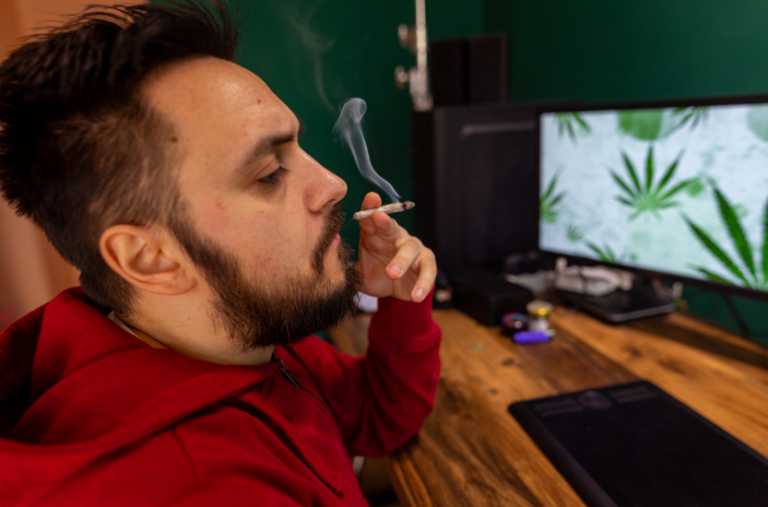
Your Score: What does it mean?
You’ve completed the test. That’s already a major step. Your score helps you better understand your current consumption patterns. It’s not a judgment. It’s a guide. Take a moment to look at your result honestly.
Conscious Approach (0–5 Points)
Congratulations, your consumption currently seems controlled and without major restrictions in daily life. You appear to be able to integrate cannabis into your life consciously and without significant issues.
What this means:
- You are still the one in the driver’s seat.
- Your habits haven’t started to replace your genuine personality or goals.
Tip: Stay mindful. A conscious approach helps you maintain this level of control in the long run.
Recognizing Warning Signs (6–12 Points)
Your score suggests that certain patterns may be developing that could become problematic over time. Cannabis might have become more regular in your daily routine than you realized.
What this means:
- You are likely using cannabis more as a “crutch” than for pure enjoyment.
- You might already feel a slight loss of motivation or clarity in your daily life.
Tip: Right now is the perfect time to pause and consciously question your habits. Small changes today can make a massive difference.
A Clear Call for Change (13–20 Points)
Your score suggests that cannabis currently has a dominant influence on your life. At this stage, consumption often becomes a deep-seated habit that affects your energy and self-confidence.
What this means:
- The weed is currently making the decisions for you, even if you don’t want it to.
- You have likely reached a point where you “function” but have stopped truly living.
This is your wake-up call. You don’t have to do this alone. Support can help you break the cycle and find your true self again.
Not sure where to start? Our guide on how to stop smoking weed covers practical first steps.
Do you want to stop smoking cannabis?
Quitting is often harder than people first expect, and there is a psychological reason for that. Over time, cannabis stops being just a “habit” and starts taking over specific functions in your life. It becomes your tool for calming down, numbing stress, or escaping uncomfortable thoughts.
If you try to quit by willpower alone without understanding why you can’t stop smoking weed, it’s incredibly easy to fall back into the same old routine. True freedom doesn’t come from just “not smoking”. It comes from outgrowing the need for it.
Our System for Your Freedom
That’s exactly why we developed a structured online program. We don’t just tell you to stop. We give you the tools to rebuild your life from the ground up.
What you will achieve with our program:
- Understand the Science: Learn exactly what happens in your brain and body during the detox phase.
- Master Your Cravings: Get proven strategies to handle withdrawal symptoms and the sudden urge to smoke.
- Reclaim Your Life: Rebuild your natural motivation, mental clarity, and discipline.
- Create a New Reality: Design a life that you actually enjoy living so you no longer feel the need to escape from it.
Start your journey today
If your self-test showed you that cannabis has more influence on your life than you’d like, now is the moment to act. You don’t have to figure this out by yourself.
Learn more about the Quit Smoking Weed & Transformation Program.