
Do Weed Detox Drinks Actually Work? What They Do, What They Do Not
The bottle is on the kitchen counter. Thirty-two ounces, bright label, forty dollars from the smoke shop, and the guy behind the register said "yeah, pass...
Read more »

The short answer
THC suppresses REM sleep, the phase where you dream. After months or years of daily use, your sleep has been shaped around THC. When you quit, your brain has to fall asleep without it again.
At the same time, REM rebound kicks in. Your brain floods you with the dream sleep it has been missing. The result is a nervous system that doesn’t wind down properly and doesn’t stay in deep sleep once it gets there.
This matters more than it seems. Sleep trouble is the withdrawal symptom most linked to going back to smoking (review on cannabis withdrawal). Here’s how sleep usually changes across our three phases:
Your sleep in the three phases after quitting
So the hardest nights are in the first ten days, and things improve clearly by weeks three to four. But “improves” doesn’t mean fixed: truly normal sleep often takes six to eight weeks. For the day-by-day picture, read: Weed Withdrawal Timeline: Day-by-Day Guide for Heavy Users
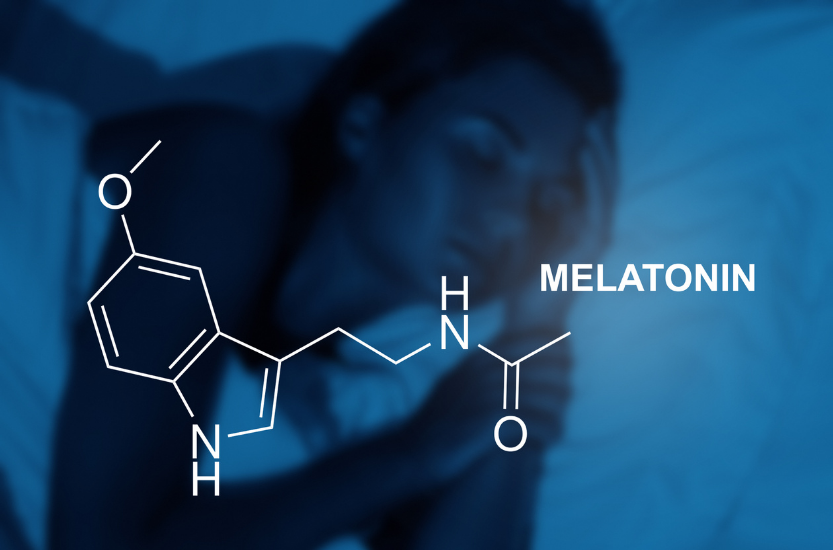
Melatonin is not a sedative. It doesn’t force sleep or shut down your nervous system. What it does is send a signal to your brain: it’s dark, it’s late, time to get ready for sleep. Your body normally makes this signal itself as the light fades. A melatonin supplement adds to it.
This makes melatonin most effective for one specific problem: taking a long time to fall asleep because your body doesn’t recognize it’s time to sleep. If your main issue is lying awake for an hour or two, staring at the ceiling with a wired brain, melatonin directly addresses that.
If your main issue is waking up again and again during the night (the REM rebound), melatonin alone won’t solve it. That takes time for your nervous system to settle, which is why many people combine melatonin with valerian root during withdrawal.
Be realistic about the size of the effect. A review of 19 studies found that melatonin helped people fall asleep about 7 minutes faster and sleep about 8 minutes longer on average (meta-analysis on melatonin and sleep). That’s modest, but on a bad night in week one, every bit of easier sleep counts.
This is the most important and most often ignored part: a low dose is the place to start.
The usual doses in many stores (3 mg, 5 mg, 10 mg) are far above the amount your body makes on its own. In one careful study of older adults with insomnia, 0.3 mg helped sleep as well as 3 mg did. The 3 mg dose also lowered body temperature and kept melatonin levels raised into the daytime (study comparing melatonin doses).
That’s why 0.5 mg to 1 mg is a good range to start with. It’s less likely to leave you groggy the next morning. If you only have 5 mg tablets, some people cut them into quarters to get closer to that range.
One more thing: in the US, melatonin is sold as a supplement, so it’s less strictly controlled than a drug. In one study of melatonin products, the amount inside often didn’t match the label. Stick with a brand you trust.
Take it 30 to 60 minutes before your planned sleep time, in a dim room. Bright light and screens send your brain the opposite signal, so they work against what you’re trying to do.
Melatonin and valerian root work through different mechanisms and complement each other well during withdrawal. Melatonin tells your brain it’s time to sleep; valerian root relaxes the nervous system enough to follow through on that signal.
A common approach: valerian root 1 to 2 hours before bed (300 to 600 mg), then melatonin 30 to 60 minutes before bed (0.5 to 1 mg). Many people find this combination works better than either one alone, especially in the first ten days, when both falling asleep and staying asleep are hard.
Valerian shouldn’t be mixed with alcohol or sleeping pills. If you take other medication, check with a pharmacist or doctor before you combine anything.
Read more: Valerian Root for Weed Withdrawal: Does It Actually Help You Sleep?
Free E-Book
You want to quit weed, but it feels impossible to actually stop?
Our free e-book shows you why willpower is a lie and the exact steps you need to quit for good. Enter your email below and we’ll send it to you for free.
Melatonin is meant for short-term use during withdrawal. Most people need it most in the first two to three weeks. By week four or five, as their sleep recovers, many people can taper off and find they don’t need it anymore.
Short-term use appears to be safe for most people. Long-term safety hasn’t been studied well, though. Mild side effects can include headache, dizziness, nausea and daytime drowsiness.
People on blood thinners or with epilepsy should only take melatonin with a doctor involved. The aim is to bridge the hardest weeks while your system recalibrates, then step back and let your body run on its own.
Melatonin won’t stop the vivid dreams and night waking of REM rebound. It won’t calm the anxiety that keeps your mind racing at 2 a.m. And it won’t speed up the recovery your brain needs to do no matter what you take. The same goes for pills that promise to flush THC, as our look at cannabis detox capsules shows.
For the anxiety-driven sleep disruption, lavender (Lasea) or CBD are more relevant options. We cover both in lavender for cannabis withdrawal and CBD oil for cannabis withdrawal. For all the options for withdrawal insomnia, read: Can’t Sleep After Quitting Weed? Here’s What Actually Helps
Melatonin is one of the easiest options to try for the sleep trouble of weed withdrawal, but only when you use it right. A low dose, taken 30 to 60 minutes before sleep, with the right expectation: help falling asleep, not a full sleep repair.
Combined with valerian root and basic sleep habits, it can make the worst of the first two weeks easier to get through. And getting through those first weeks without smoking matters a lot for whether this quit sticks.
If you want a complete structure for quitting weed, with a clear path through all three phases instead of managing symptoms night by night, our Cannabis Detox Program is built for exactly that.

About the author
Sabrina S. · Health Coach, QSW Team
Sabrina is the health coach of the QSW team. Like everyone on the team, Sabrina knows cannabis from personal experience and covers what your body goes through when you quit: sleep, sweating, appetite and recovery.
More about Sabrina →The bottle is on the kitchen counter. Thirty-two ounces, bright label, forty dollars from the smoke shop, and the guy behind the register said "yeah, pass...
Read more »
Supplements won't do the work of quitting for you, and they won't eliminate withdrawal. But some of them do make specific symptoms meaningfully easier to get…
Read more »
CBD has become one of the most talked-about tools for quitting weed, and the conversation ranges from "it completely eliminated my cravings" to "it did…
Read more »