

Can You Overdose on Weed? What Greening Out Actually Is
It is one in the morning and you are sitting on the bathroom floor with your back against the tub. Your heart is going faster than...
Read more »
You stop smoking and want to know: when is it actually out of your system? The answer depends on what you mean by “out of your system”, and the honest answer is more nuanced than the generic “30 days” you’ll find in most places.


The short answer
When people say “THC-free,” they usually mean one of two things.
1. The high is gone. After a single joint, the high peaks within about half an hour. Some effects can hang on for up to about six hours.
THC itself drops out of your blood within hours to about a day. That’s separate from what a drug test looks for.
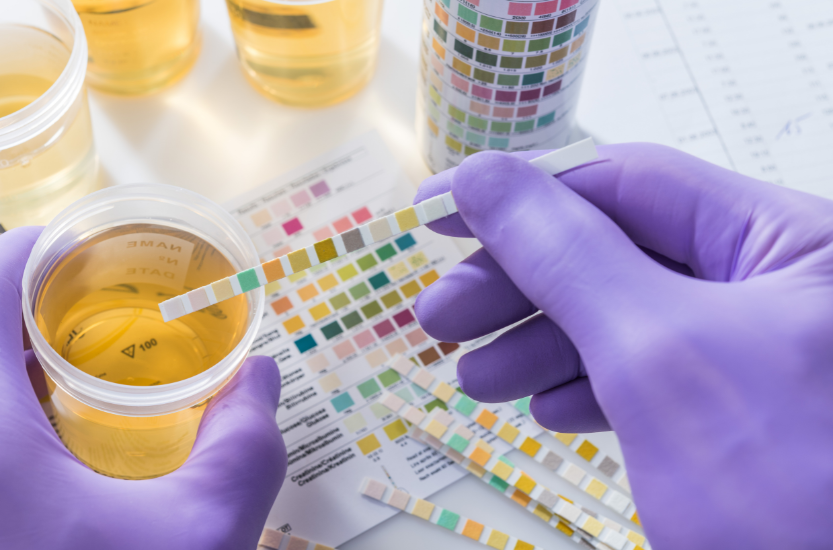
2. Drug tests come back negative. This depends on metabolites, the breakdown products your liver makes from THC. The main one tests look for is called THC-COOH.
In heavy users, these metabolites sit in fat tissue and leak back into the blood and urine for weeks after the last joint. That’s why “out of your system” can mean hours or months, depending on which clock you’re asking about.
Every test type looks at a different window. Here’s what the studies listed at the end found, from a single joint up to years of daily use.
How long weed shows up, by test
| Test | After one joint | After daily use |
|---|---|---|
| Urine | Usually 1 to 3 days, up to about a week on very sensitive tests | Usually 3 to 6 weeks, 2 to 3 months after years of heavy use |
| Blood | THC itself for hours, up to about a day | Some daily smokers still test positive after a month |
| Saliva | Up to about a day | Usually about 2 days |
| Hair | Often too little to register | Looks back months, about 1 cm of hair per month |
Urine is the test most people face. For daily users, the most common range is three to six weeks. After years of heavy daily use, plan for two to three months.
In one supervised study of 86 chronic users, it took 27 days on average to test negative. The slowest person needed 77 days (Ellis et al. 1985). Many people also had a few negative days in between, followed by another positive result.
Blood and saliva mostly catch recent use. In a study of daily smokers kept on a closed research ward, THC in saliva was usually measurable for about 48 hours. In blood, though, some of them still tested positive after a month.
Hair works differently. Head hair grows about 1 cm a month and stores what was in your blood while it grew, so a hair test looks back months, not days. For a full guide to testing during detox: THC Drug Test During Cannabis Detox.
This is the question behind a lot of the panic. You smoked once at a party on Saturday, you haven’t touched it in months before that, and now there’s a test on Wednesday. Or you’re three weeks into quitting, slipped once last night, and want to know whether you just reset the clock.
The honest answer for a true one-off is more reassuring than most people expect. If your body had no THC stored up before that night, there’s simply not much to clear out.
So for a genuine one-time use with a clean history, a urine test a few days later is usually fine. That’s the good news, and it’s real.
Here’s where a lot of people fool themselves. “I only smoked one joint last night” means something completely different when last night was one of two hundred nights this year.
THC is stored in fat. If you’ve been using daily or near-daily, your fat tissue has been quietly banking it for months. One night off, or one night on after three weeks off, isn’t the variable that matters. The stockpile is.
That stockpile leaks back into your blood and urine slowly. That’s why a heavy user can test positive for weeks, in rare cases more than two months, while a first-timer is clear by Thursday.
This is also why a slip during a quit attempt is less of a reset than it feels. If you were a daily user and you’ve been clean for three weeks, your levels have dropped but probably aren’t at zero yet. One night adds a small amount on top of a slowly falling curve.
It doesn’t put you back at day one for the test, and it doesn’t put your brain back at day one either. What it does do is remind your body of the routine. That’s the part worth taking seriously, more than the test.
The short version: the one-night numbers above only work if your body was actually empty before that night. If it wasn’t, you’re looking at the daily-use timelines in the table, not these. For the full picture on what shows up on a test during a detox, and what does and doesn’t speed things up, read THC Drug Test During Cannabis Detox.
THC dissolves in fat, not water. Alcohol spreads through the body’s water and clears fairly evenly. THC gets stored in fat tissue and seeps back into the blood bit by bit.
The more you’ve used and the stronger the weed, the bigger that store gets. For someone who smoked high-THC weed every day for years, it can take weeks or even a couple of months to empty.
What about exercise? Burning fat can release some of that stored THC. In one study, 35 minutes on an exercise bike gave regular users a small rise in blood THC (Wong et al. 2013).
A second study looked at daily users in detox and found no major change in blood or urine after a 45-minute workout (Westin et al. 2014). So exercise is unlikely to flip a test on its own. It also won’t flush you out faster.
The important thing to separate: feeling better doesn’t mean testing clean. The high wears off within hours. The withdrawal symptoms peak in the first week and mostly ease within two to four weeks.
But someone who used heavily every day for years may still test positive at six weeks while feeling normal and past the withdrawal. In our Cannabis Detox Program, those first weeks are split into three phases, and none of them waits for the test.
Three clocks after your last joint
It works the other way around too. Testing negative doesn’t mean your brain has fully recovered. Your receptors and your reward system keep readjusting for weeks to months, no matter what a urine test shows.
For the full recovery timeline: Quitting Weed Benefits Timeline. And if you’re quitting right now, this guide walks you through the first weeks at home: How to Detox From Weed at Home.
Got a drug test on a fixed date? Then only a few things really matter. How long ago you stopped. How heavily you were using. And how much body fat you have, because more fat means more storage.
Drinking a normal amount of water keeps your urine from being extra concentrated on test day. But there’s no reliable shortcut. Time is the only thing that actually clears THC.
If you’re using this waiting time to quit for good, our Cannabis Detox Program takes you through all three phases, from the rough first days to feeling clear again.
For daily users, three to six weeks is the most common range. After years of heavy daily use, it can take two to three months. In one supervised study of chronic users, the average was 27 days and the slowest person needed 77 days to test negative.
No reliable method speeds it up much. Drinking normally keeps your urine from being extra concentrated. Exercise burns fat, but in studies it barely changed THC levels in urine. There's no detox drink or supplement that meaningfully shortens the window. Time is the only reliable variable.
No, these are different timelines. Withdrawal comes from your brain adjusting to life without THC, not from how much is still stored in your fat. The acute withdrawal phase ends within two to four weeks for most people, no matter how long metabolites stay detectable in urine.
If you don't normally smoke, usually one to three days in urine. In a controlled study, a standard 50 ng/mL test caught a single joint for less than two days on average. Very sensitive tests caught a strong joint for three to six days. Saliva shows it for up to about a day.
Not to day one. If you were a daily user and stopped weeks ago, one night adds a small amount on top of levels that are already falling. Your test window gets a little longer, but you don't start over.

About the author
Sabrina S. · Health Coach, QSW Team
Sabrina is the health coach of the QSW team. Like everyone on the team, Sabrina knows cannabis from personal experience and covers what your body goes through when you quit: sleep, sweating, appetite and recovery.
More about Sabrina →QSW-Team · 17. September 2026
It is one in the morning and you are sitting on the bathroom floor with your back against the tub. Your heart is going faster than...
Read more »
QSW-Team · 15. September 2026
You're standing in the cereal aisle. The light is too white, the shelves look flat, like a photo of shelves, and your own hand on the...
Read more »
Maik R. · 4. June 2026
When people talk about what weed does to your brain, the conversation usually focuses on the damage side. What happens after is discussed much less, even…
Read more »
We use cookies and similar technologies to store and access device information. By consenting, you allow us to process data such as browsing behavior or unique IDs on this site. Not consenting or withdrawing consent may negatively affect certain features and functions.