How It Became My System
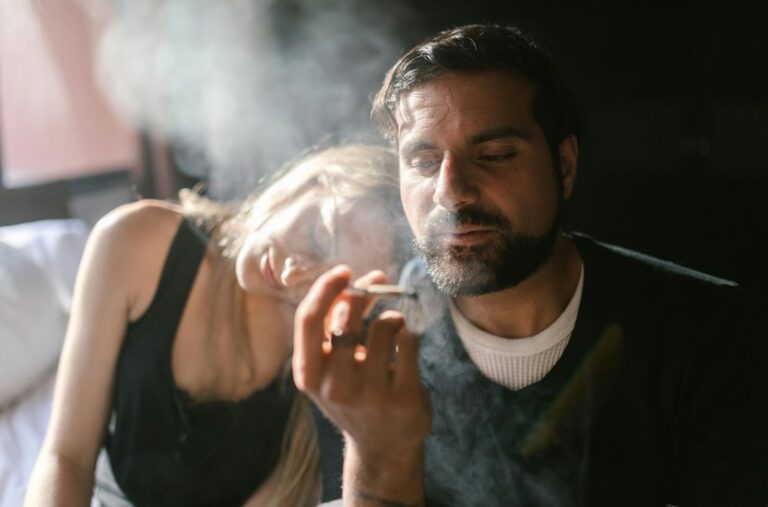
I started when I was seventeen. By the time I was at university it was just part of how I managed. Not every day, then most days, then every evening without thinking about it.
It wasn’t dramatic. It just became the shape of my evenings, the thing that marked the end of the day. Work done, use cannabis, feel better. That sequence felt like a working system.
Waiting to Relax
The first few months after I stopped, I kept waiting to relax. I’d sit with a book or watch something and feel this low-level restlessness that I hadn’t noticed before. Or maybe I’d always had it and had never been sober enough to register it.
I kept thinking: I need to find a way to wind down. As though I’d lost a tool and needed to find a replacement.
A Cup of Tea in Early Spring
Then something shifted, and it’s hard to describe precisely. I was sitting outside one evening in early spring, just having a cup of tea, nothing noteworthy about it. And I noticed I was actually there. Present in it.
I could feel the temperature of the air, and I was thinking about the day. Some of it was uncomfortable to think about, but I was thinking about it clearly rather than just feeling it blur away. I didn’t feel relaxed in the way I’d thought I used to feel relaxed. I felt something more textured than that.
Newsletter
Stay with it, even when it feels hard right now
Join our newsletter. You will get new articles, other people’s experiences and answers to the questions we hear most often. You can unsubscribe with one click at any time.
Not Peace. Silence.
That’s when I started to understand the difference. What cannabis had been doing wasn’t relaxing me. It was flattening everything. Anxiety went down. But so did everything else: curiosity, engagement, the small pleasures of paying attention.
What I’d experienced as calm was mostly just an absence of signal. Not peace. Silence. And I’d confused the two for years because I’d never had enough contrast to know they were different.
Real relaxation, I’m finding, is active. It requires being present in something. Reading and actually following the sentences. A conversation where I’m genuinely listening. A walk where I’m noticing things.
None of that was available to me when I was numbing the signal. I thought I was resting. I was mostly just waiting for the numbness to wear off so I could numb it again.
Harder Than I’d Budgeted For
The withdrawal period was harder than I expected, partly because I hadn’t thought of myself as someone who was dependent on anything. I didn’t like that word applied to me.
But the anxiety that spiked in the first few weeks, the sleep disruption, the flatness that came before anything got better, those things were real and they took longer than I’d budgeted for. There’s useful information about what to expect in the withdrawal timeline that I wish I’d read before I stopped rather than during.
The Anxiety Was Information
The thing nobody tells you clearly enough is that the discomfort on the other side isn’t evidence that something’s wrong. For me it was evidence that things were starting to work again.
The anxiety that came back after I stopped was anxiety that had been there all along, just muted. Feeling it wasn’t regression. It was information. I could actually work with information.
I’m not saying cannabis is uniquely dangerous or that everyone using it is making the same mistake I was. But I was using it to manage something I hadn’t been willing to sit with, and the managing had become its own problem.
The feelings I was softening were also the feelings that told me what mattered to me, what I wanted, what needed to change. Numbing those things is a very effective way to stay exactly where you are.
A Year Later
A year out from quitting, my anxiety is actually lower than it was when I was smoking. That’s the part that still surprises me. The thing I thought was treating my anxiety was probably generating it.
The relaxation I thought I was getting was borrowed. The real version turns out to be harder and better at the same time.
If you want to find out what your own calm feels like without weed, our Cannabis Detox Program walks you through the first weeks, including the restless stretch before things get better.