
Do Weed Detox Drinks Actually Work? What They Do, What They Do Not
The bottle is on the kitchen counter. Thirty-two ounces, bright label, forty dollars from the smoke shop, and the guy behind the register said "yeah, pass...
Read more »

The short answer
The most common reason people hesitate: “Isn’t CBD still cannabis? Am I just trading one habit for another?”
That’s a fair question, and it deserves a straight answer. No, and here is why the comparison doesn’t hold.
Cannabis dependence is built on THC. THC binds to CB1 receptors in your brain and triggers dopamine release. That’s the mechanism behind the high, the craving and, over time, the dependence.
Your brain learns to expect that outside hit. When it stops coming, you feel the withdrawal.
CBD does not activate cannabinoid receptors and does not produce a high. There is no reward loop and no craving for more. The WHO’s expert committee on drug dependence found that in humans, CBD shows no effects that point to abuse or dependence potential. They share a plant, but they act on very different systems.
THC and CBD side by side
| Question | THC | CBD |
|---|---|---|
| Activates CB1 receptors? | Yes | No |
| Gets you high? | Yes | No |
| Triggers the dopamine reward? | Yes | No |
| Signs of dependence in humans? | Yes | None found by the WHO |
| What it does to your own anandamide | Competes for the same receptors | Slows its breakdown |
If you want the full comparison of the two compounds, we cover it here: THC vs CBD: What’s the Difference?
Here is the piece that makes CBD make sense, and that most articles skip.
Your brain has an endocannabinoid system. It makes its own cannabinoids, and the best known one is anandamide, sometimes called the bliss molecule. Anandamide helps regulate mood, stress and sleep. It’s part of how your brain normally keeps itself balanced.
When you smoke weed daily for months or years, THC floods the same CB1 receptors that anandamide uses. Your brain adapts by turning its own system down. Brain scans of daily smokers show fewer available CB1 receptors than in non-smokers.
When you quit, the outside supply disappears overnight, while your own system is still turned down. The anxiety, the restlessness, the insomnia, the irritability: this is what that gap feels like. It isn’t weakness. It’s a system that needs time to come back.
The good news is that it does come back. In the same scans, the receptors were back to near normal levels after about four weeks without weed.
For more on what is happening physically during withdrawal: Weed Withdrawal Symptoms: What to Expect and How to Cope
Your body still makes some anandamide during withdrawal, just less than you’d like. An enzyme called FAAH breaks anandamide down after it’s released. CBD moderately slows that breakdown, so your own anandamide stays active a bit longer.
In a clinical trial in Germany, people who took CBD had clearly higher anandamide levels in their blood. That trial was about schizophrenia, not weed, but it shows the mechanism works in humans and not just in a lab dish.
This is not CBD replacing THC. It’s CBD stretching the anandamide your own body already makes, inside the exact system that weed threw off balance. No high, no outside cannabinoid, no reward loop.
No other common withdrawal supplement works this way. Valerian acts on GABA, melatonin on sleep timing, magnesium on mineral balance. CBD is the only one that works directly on the endocannabinoid system, the one cannabis disrupted.
Here’s the honest part. Most of what people say about CBD and quitting comes from personal reports, not studies.
The best study so far is a 2020 trial in London with 82 people who had cannabis use disorder. All of them got short counseling sessions. On top of that, they took either CBD or a placebo for four weeks.
People on 400 mg or 800 mg of CBD a day smoked less and had more weed-free days than the placebo group. The 200 mg dose did nothing useful and was dropped halfway through. Nobody had serious side effects.
Two things to keep in mind. The trial measured how much people smoked, not how bad their withdrawal felt. And the doses were many times higher than what a typical CBD oil gives you per day. So the trial supports the idea, but it doesn’t prove that a few drops of oil will ease your withdrawal.
Anxiety. This is where people most often report a difference. The low-grade background anxiety of withdrawal, the kind that makes everything harder, is the symptom people most reliably say gets better with CBD.
Not gone, but turned down to a level you can manage.
Sleep. CBD does not knock you out. It eases the anxiety and physical tension that keep you from falling asleep. Many people describe it as the absence of what kept them awake, rather than something that made them tired.
That matters for how you use it: take it 30 to 60 minutes before bed, not as a sleeping pill.
Irritability. By supporting anandamide, CBD can take some of the edge off your mood swings. The big reactions to small frustrations get a bit smaller.
It’s subtle, but it matters for getting through the day and for the people around you.
What CBD reaches and what it doesn’t
| Part of withdrawal | Does CBD reach it? |
|---|---|
| Background anxiety | Most often reported as better |
| Falling asleep | Indirectly, by easing tension |
| Irritability | Can take some of the edge off |
| The ritual of rolling and smoking | No |
| Boredom and the empty evening | No |
What CBD does not fix: the craving for the ritual, the boredom you used to fill with weed, and the reasons you were smoking in the first place. CBD supports the biological recovery. The psychological work is separate.
Those limits are concrete. Grinding, rolling and packing, the hand-to-mouth habit, the couch at eight o’clock: these are loops that took years to build, and no oil or capsule reaches them.
If you take CBD and change nothing else about your routine, you’ve mostly bought a calmer version of the same week. What CBD can do is keep the physical discomfort low enough that you have energy left for breaking the habits themselves. That’s the part that actually does the quitting.
For a full picture of what helps during withdrawal: What Helps With Weed Withdrawal? The Most Effective Remedies
Free E-Book
You want to quit weed, but it feels impossible to actually stop?
Our free e-book shows you why willpower is a lie and the exact steps you need to quit for good. Enter your email below and we’ll send it to you for free.
The market is full of products with inconsistent labeling and no independent testing. For withdrawal support, a few things actually matter.
Full-spectrum over isolate. Full-spectrum CBD contains the whole range of cannabinoids and terpenes from hemp, not just CBD. Many people prefer it, and the idea is that these compounds work better together, the so-called entourage effect. That idea is popular, but the research behind it is still thin.
One thing to know: full-spectrum oils can contain small traces of THC. If you’re facing a drug test, read the lab report before you buy.
Third-party lab testing. This is the point that matters most. When researchers tested 84 CBD products sold online, only about 31% contained the amount of CBD on the label, and 21% contained THC.
Any oil worth taking has a certificate of analysis from an independent lab that confirms the real cannabinoid content and the absence of contaminants. If a product doesn’t have one, skip it.
Strength. For most people starting withdrawal, 10% is the right entry point. It gives you room to find your dose without being needlessly strong.
If you were a heavy, long-term user or your anxiety is significant, 20% gives you more room to work with. For severe withdrawal symptoms, 40% exists for those who need it.
Dosing. 20 to 30 mg once or twice daily. CBD’s effects build with steady use, so give it five to seven days before you decide whether it’s working. Steady daily doses at a moderate level do more than a single large dose now and then.
The reason consistency matters isn’t only chemical. If you reach for a few drops only when a bad moment hits, CBD turns into a rescue remedy. That quietly rebuilds the reflex you’re trying to lose: feel bad, take something, feel better.
Taking it at a fixed time, with your morning coffee or after dinner, no matter how the day is going, keeps the habit separate from your mood. Patience matters in the same way. Stopping on day two because nothing seemed to happen is the most common way people end up deciding it doesn’t work.
Other medication. CBD is processed by the same liver enzymes as many common medicines, so it can change how strongly those medicines work. If you take any other medication, check with a pharmacist or doctor before you start.
The CBD oils our community uses are here: CBD Oil for Cannabis Withdrawal: All Strengths
CBD works better as part of a broader approach. For sleep, CBD in the evening plus magnesium glycinate covers two separate mechanisms. CBD supports anandamide, magnesium supports GABA. Together they cover sleep problems more completely than either one alone.
Exercise matters too, and it isn’t optional. Daily movement lowers anxiety and improves sleep in ways that have nothing to do with CBD. If you take CBD but sit on the couch all day, you’re leaving half the recovery on the table.
Read more: Magnesium for Cannabis Withdrawal: What It Does for Anxiety and Sleep
CBD is not a magic supplement and it isn’t for everyone. But it’s the only supplement that works directly on the endocannabinoid system, the system cannabis threw off balance. That makes it a genuinely different option from everything else on the list.
For anxiety, sleep and the general edginess of the first two to three weeks, used consistently at the right strength, it’s the supplement that comes up most often when people in our community describe what actually helped. That isn’t marketing. That’s what we hear from people who have been through it.
It’s worth being plain about proportion too. How CBD slows the breakdown of anandamide is far better understood than how big the benefit will be for you. For some people it’s the bridge that carries them through the first month. For others the effect is so mild they barely notice it.
It can soften the landing in the first two to three weeks, but it’s not the reason anyone succeeds.
If you want a complete structure for the whole withdrawal process, through all three phases of recovery and not just supplements, our Cannabis Detox Program is built around exactly that.
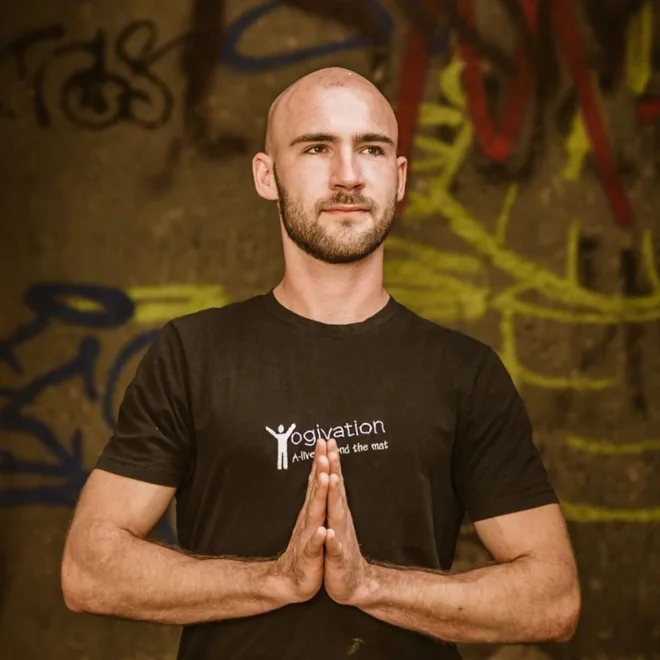
About the author
Devin M. · Meditation Coach, QSW Team
Devin is the meditation coach of the QSW team and writes about relaxation, mindfulness and natural aids that make withdrawal easier. Like everyone on the team, Devin has personal experience with quitting weed.
More about Devin →The bottle is on the kitchen counter. Thirty-two ounces, bright label, forty dollars from the smoke shop, and the guy behind the register said "yeah, pass...
Read more »
Supplements won't do the work of quitting for you, and they won't eliminate withdrawal. But some of them do make specific symptoms meaningfully easier to get…
Read more »
Magnesium is one of the most overlooked natural options for cannabis withdrawal, which is surprising, because the symptoms it targets are exactly the ones…
Read more »