

Can You Overdose on Weed? What Greening Out Actually Is
It is one in the morning and you are sitting on the bathroom floor with your back against the tub. Your heart is going faster than...
Read more »

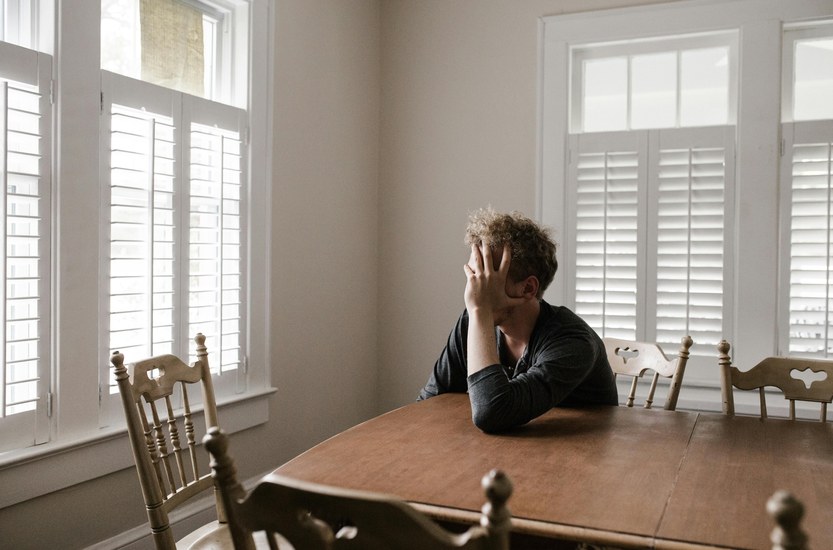
Cannabis-induced psychosis gets either blown out of proportion or brushed off, depending on who’s talking. Neither is accurate. It is real, it is rare, and it hits some people far harder than others. Here is what it actually is, who is at risk and what happens after an episode.


The short answer
Psychosis means losing touch with the reality everyone else shares. The core signs are hallucinations (seeing or hearing things that aren’t there), delusions (fixed beliefs that don’t match reality) and disorganized thinking, where thoughts stop linking up and a conversation becomes hard to follow.
That is a different thing from feeling anxious, paranoid or confused while high. During a normal high, even a bad one, you still know the weed is doing it. In psychosis, that insight is gone.
Cannabis-induced psychosis is psychosis that starts while someone is high or in the days right after, in a person who wasn’t psychotic before. It also outlasts the high. A cannabis high wears off within 24 hours, while cannabis-induced psychosis can last for days and even weeks.
Visual hallucinations seem to be more common here than in schizophrenia, where hearing voices is more typical. A Spanish study comparing the two groups found more visual hallucinations, more feelings of unreality and more confusion in the cannabis group. That difference can help doctors work out what is going on.
Rare enough that most people who smoke will never go through it. Common enough that emergency rooms and psychiatrists see it regularly.
The trend is going up. In Denmark, where every psychiatric diagnosis lands in one national register, new cases of cannabis-induced psychosis more than doubled in ten years, from 2.8 to 6.1 per 100,000 people per year between 2006 and 2016. The researchers linked that rise to stronger weed and more people smoking it, not to doctors simply diagnosing it more often.
The risk isn’t spread evenly, though. Some people are much more vulnerable than others, and knowing who they are tells you more than any average.
The strongest risk factor is a personal or family history of psychotic illness. If a parent, brother or sister has schizophrenia, schizoaffective disorder or another psychotic disorder, your risk is clearly higher. The same goes if you’ve had a short psychotic episode yourself, even one that cleared up quickly.
One way to picture it is a walk across a frozen lake. Cannabis is a heavy backpack, and family history decides how thick the ice is. On thick ice the backpack is only extra weight. On thin ice the same weight can be what breaks it, which is why the same habit can carry very different risks for two different people.
Starting young is the second big factor. The parts of the brain that handle judgment and emotion keep developing into the mid-twenties. Heavy THC during those years seems to lower the threshold for a psychotic break in people who are already vulnerable.
During adolescence the brain goes through a large pruning process, cutting weak connections and strengthening the pathways that get used. Regular high doses during that window interfere with how this wiring settles, in a way they do not once the brain has finished developing. An adult brain is closer to a finished house, while a teenage brain is still having its foundation laid.
Strength and frequency matter too. A study across eleven cities in Europe and Brazil found that smoking every day went along with about three times the odds of a psychotic disorder compared with never smoking. With daily use of strong weed (10% THC or more), the odds were nearly five times higher.
That matters because weed has changed. In US police seizures, average THC rose from about 4% in 1995 to about 12% in 2014, and concentrates and dabs go far higher.
Existing anxiety disorders, mood disorders and especially PTSD also seem to raise the risk, likely because they involve some of the same brain systems.
A bad high or psychosis?
| What you notice | A bad high | Psychosis |
|---|---|---|
| Knowing it’s the weed | Yes, even while scared | No, the beliefs feel completely real |
| Fear and paranoia | Strong, but you can be talked down a bit | Can’t be reasoned with |
| Seeing or hearing things | Odd colors or sounds you know aren’t real | Things that aren’t there, taken as real |
It can start suddenly, with someone becoming agitated, paranoid and cut off from reality during or shortly after smoking. Or it can build up over several days of heavy use.
From the inside it’s terrifying. Thoughts stop connecting, familiar places feel threatening or unreal, and the person can become sure of things that make complete sense to them and none to anyone else.
From the outside you usually see extreme paranoia that no argument can reach, strange or erratic behavior, and sometimes no reaction to anything around them. People in this state often can’t tell you what’s happening, because their own thinking is disorganized.
It’s a medical situation, not something to handle at home with calm talk.
When to get help right now: if someone hears or sees things that aren’t there, holds beliefs nobody can talk them out of, or might hurt themselves or someone else, call 911 or go to the nearest emergency room. In the US you can also call or text 988, day or night, for any mental health crisis, including one caused by drugs.
For most people the acute episode settles once the weed stops and they get proper care. It can last for days and sometimes weeks. That’s longer than any high, but it does end.
The bigger question is what comes after. A Danish study followed everyone diagnosed with substance-induced psychosis over twenty years. Of those whose psychosis was triggered by cannabis, 47.4% were later diagnosed with schizophrenia or bipolar disorder, the highest rate of any drug in the study. Half of the switches to schizophrenia happened within about three years, and younger people were at higher risk.
How long it lasts and what can follow
| What | How long or how many |
|---|---|
| A cannabis high | Over within 24 hours |
| A cannabis-induced psychotic episode | Days, sometimes weeks |
| Later diagnosed with schizophrenia or bipolar disorder | 47.4% of diagnosed cases |
| When the switch to schizophrenia came | Half of them within about 3 years |
Keep in mind who is in that study: people sick enough to get a hospital diagnosis. It doesn’t mean every frightening high leads to schizophrenia. It does mean one episode is a serious warning sign, especially with a family history of psychosis.
Treatment in the acute phase is up to the doctors and depends on how severe it is. What everyone agrees on is stopping cannabis. Later on, therapy can help with working through what happened and staying off weed.
Read also: How Daily Cannabis Use Changes the Brain
Some people worry about the opposite: that quitting itself could set off psychosis. It can happen, but it’s rare and follows its own pattern. We cover it in Cannabis Withdrawal Psychosis: Is It Real and Who’s Actually at Risk?
Whether cannabis causes schizophrenia is one of the most studied questions in psychiatry. The current picture: for people with a genetic vulnerability, cannabis is a risk factor that can bring on the illness earlier or push someone over the edge who was already heading that way.
With no family history and no earlier psychiatric problems, the risk of weed causing a lasting psychotic disorder is low. With a parent, brother or sister who has schizophrenia, the risk is real enough to take seriously.
That’s no reason for most people who smoke to panic. It is a reason for anyone with that family history to think hard about it.
A useful comparison is heart disease in the family. Most people accept that it calls for practical caution with diet, blood pressure and regular checkups, and nobody treats that as a personal failure. A family history of psychotic illness deserves the same plain, practical caution about what goes into the brain, without shame and without panic.
Read also: Weed and Anxiety: How Cannabis Causes the Very Problem It Seems to Solve
Cannabis-induced psychosis is real, it has clear risk factors, and it has become more common as weed got stronger. For most people with no psychiatric history the risk stays low. For people with a family history of psychosis, who started young or who smoke strong weed every day, it’s a real risk worth taking seriously.
If you’ve decided to stop, our Cannabis Detox Program takes you through the first weeks step by step. If you’ve already had a psychotic episode, talk to your doctor before you quit too.
In rare cases, with a very high THC dose and a strong underlying vulnerability, yes. But for most people with no personal or family history of psychotic illness, a single use won't cause psychosis. The risk rises a lot with heavy, frequent use of strong products.
A bad trip brings fear, anxiety and overwhelming sensations, but the person usually still knows it's the cannabis. Psychosis means losing that insight and losing touch with shared reality, and it doesn't go away just because the high wears off.
The acute episode usually settles within days to weeks after stopping cannabis, with proper care. But close to half of the people diagnosed with it in a large Danish study were later diagnosed with schizophrenia or bipolar disorder, so a doctor should always be involved, both during the episode and afterward.
The risk of it coming back is high. Most clinical guidance strongly recommends staying away from cannabis for good after a cannabis-induced psychotic episode, especially if there's any family history of psychotic illness.
Stay calm, keep the room quiet and get medical help: call 911 or take them to an emergency room. In the US you can also call or text 988 for advice. Don't try to argue them out of what they believe. Emergency rooms and psychiatric services know how to handle this.
It looks that way. In Denmark, new cases more than doubled between 2006 and 2016, from 2.8 to 6.1 per 100,000 people per year. The researchers tied the rise to higher THC levels and more people smoking.

About the author
Janis G. · Mental Clarity Coach, QSW Team
Janis is the mental clarity coach of the QSW team and writes about the mental side of quitting weed: anxiety, low mood, motivation and getting your focus back. Like everyone on the team, Janis has been through it personally.
More about Janis →QSW-Team · 17. September 2026
It is one in the morning and you are sitting on the bathroom floor with your back against the tub. Your heart is going faster than...
Read more »
QSW-Team · 15. September 2026
You're standing in the cereal aisle. The light is too white, the shelves look flat, like a photo of shelves, and your own hand on the...
Read more »
Maik R. · 4. June 2026
When people talk about what weed does to your brain, the conversation usually focuses on the damage side. What happens after is discussed much less, even…
Read more »
We use cookies and similar technologies to store and access device information. By consenting, you allow us to process data such as browsing behavior or unique IDs on this site. Not consenting or withdrawing consent may negatively affect certain features and functions.