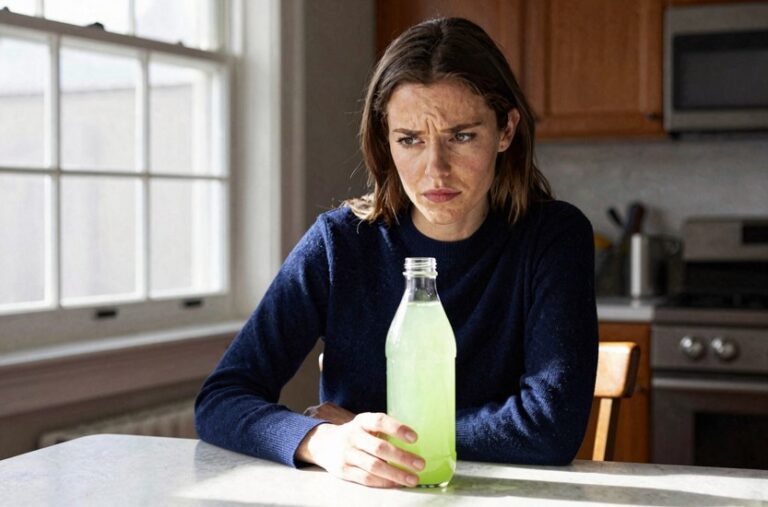
Do Weed Detox Drinks Actually Work? What They Do, What They Do Not
The bottle is on the kitchen counter. Thirty-two ounces, bright label, forty dollars from the smoke shop, and the guy behind the register said "yeah, pass...
Read more »


The short answer
THC suppresses REM sleep. Your brain, after months or years of near-zero REM activity, goes into rebound when THC is removed.
The result is intense dreaming, frequent waking, and a nervous system that doesn’t know how to settle down without the chemical cue it’s been using.
This phase peaks in the first week and typically improves significantly by weeks three to four, but “significantly” doesn’t mean normal. Most daily users don’t get truly restful sleep until six to eight weeks in. That’s a long time to function on broken rest, which is why people start looking for help.
Your sleep through the three phases
For more on what the first weeks look like, read: Weed Withdrawal Timeline: Day-by-Day Guide for Heavy Users
Before reaching for sleep aids, it’s worth knowing the gentler options. Valerian root (300 to 600 mg, 1 to 2 hours before bed) is the one most people try first. It’s thought to work on GABA, the brain’s own calming system. The studies on it are small and mixed, but some people find it takes the edge off the worst nights.
Melatonin at a low dose (0.5 to 1 mg) helps signal to your brain that it’s time to sleep without affecting the actual sleep architecture. It’s particularly useful if your main problem is lying awake for a long time before falling asleep.
These are the first line for a reason: they don’t create dependency, they support your brain’s own recovery process, and they have minimal interaction with the systems withdrawal is already disrupting.
One honest note: sleep doctors don’t recommend either one as a long-term fix for ongoing insomnia. Think of them as short-term help for a rough patch.
When the gentle options do help, the change is usually modest: a few broken hours become a few more, not a full night of rest. Measured against a normal night, that gain can look like failure, and that is often when people reach for something stronger without a real reason.
Read more: Valerian Root for Weed Withdrawal: Does It Actually Help You Sleep? and Melatonin for Weed Withdrawal: Does It Actually Fix the Sleep?
The sleep aids on the drugstore shelf are mostly antihistamines, like diphenhydramine. They’re sold without a prescription, but that doesn’t make them harmless, and there are two things you should know before you buy one.
Next-day grogginess. Antihistamine sleep aids often leave you drowsy and foggy the next morning. Don’t drive or operate machinery until you know how one affects you, and don’t mix it with alcohol, which makes the drowsiness worse.
Not for long-term use. Your body gets used to them quickly, so they work less and less. Stopping after regular use can bring the bad sleep back harder, the last thing you need during withdrawal. Sleep doctors advise against them for ongoing insomnia.
Check with a pharmacist or doctor if you take other medication. That includes supplements like valerian or melatonin. Even over-the-counter sleep aids can interact with other things you’re taking.
Whatever you decide about stronger options, decide it during the day while you are rested, not at three in the morning. After hours of lying awake, the answer to every version of the question is simply yes.
Free E-Book
You want to quit weed, but it feels impossible to actually stop?
Our free e-book shows you why willpower is a lie and the exact steps you need to quit for good. Enter your email below and we’ll send it to you for free.
Benzodiazepines, Z-drugs (zopiclone, zolpidem) and other prescription sleeping pills are not a home fix for withdrawal sleep. They carry their own dependency risk and need a doctor’s supervision. Don’t get them on your own as a withdrawal fix. If your sleep is still badly broken after a couple of weeks, talk to a doctor about it.
Alcohol is the other one worth naming explicitly: it’s the most common “self-medication” for withdrawal insomnia, and it actively worsens sleep quality while creating its own dependency risk. It’s not a sleep aid; it’s a sedative that fragments sleep architecture further.
Sleep aids (natural or OTC) are symptom management. Your brain’s sleep system needs to relearn how to function without THC, and that process takes time regardless of what you take.
The goal isn’t to find a supplement that makes withdrawal sleep normal. The goal is to survive the acute phase without relapsing, while giving your nervous system the space to recover.
Sleep quality keeps climbing through weeks three to six, so a rough night in week five is not evidence that anything is going backwards. It is part of the shape of the recovery while the brain finds its balance again.
For more on the insomnia side of withdrawal, read: Can’t Sleep After Quitting Weed? Here’s What Actually Helps
Sleep aids have a place in cannabis withdrawal, but a small one. The gentle options can take the edge off the worst nights, while your brain does the real work of recovery. Use them sparingly, know what to avoid, and remember the bad sleep has an end point.
If you want a structured path through withdrawal, from day one to lasting clarity, our Cannabis Detox Program is built around that. Sleep support is one piece of it.

About the author
Sabrina S. · Health Coach, QSW Team
Sabrina is the health coach of the QSW team. Like everyone on the team, Sabrina knows cannabis from personal experience and covers what your body goes through when you quit: sleep, sweating, appetite and recovery.
More about Sabrina →The bottle is on the kitchen counter. Thirty-two ounces, bright label, forty dollars from the smoke shop, and the guy behind the register said "yeah, pass...
Read more »
Supplements won't do the work of quitting for you, and they won't eliminate withdrawal. But some of them do make specific symptoms meaningfully easier to get…
Read more »
CBD has become one of the most talked-about tools for quitting weed, and the conversation ranges from "it completely eliminated my cravings" to "it did…
Read more »