THC and CBD are both cannabinoids found in the cannabis plant, but they behave very differently in the body, and confusing them leads to poor decisions about both cannabis use and cannabis quitting. Here’s a clear breakdown of what each actually does.
The short answer
THC is what gets you high. It’s also the part of cannabis behind tolerance, dependence and withdrawal.
CBD doesn’t get you high, and the WHO found no potential for abuse or dependence.
CBD doesn’t cancel out THC. In a 2023 trial, adding CBD at common product ratios didn’t reduce THC’s effects on memory or paranoia.
CBD won’t prevent withdrawal, though it may take the edge off anxiety or sleep for some people.
THC: The Compound That Gets You High
Tetrahydrocannabinol (THC) is the compound behind the “high.” It binds directly to CB1 receptors in your brain. Those receptors are part of the endocannabinoid system, which helps run your mood, memory, pain, appetite and stress response.
When THC switches those receptors on, you get the typical effects: euphoria, time slowing down, the munchies, a patchy short-term memory and, for some people in some situations, anxiety or paranoia. How strong that gets depends on the dose, the product and how sensitive you are.
THC is also the part of cannabis that causes tolerance, dependence and withdrawal. When CB1 receptors get hit every day, your brain cuts back on them. You need more for the same effect, and your body adapts to THC being there. When you stop, that adaptation is what you feel as withdrawal.
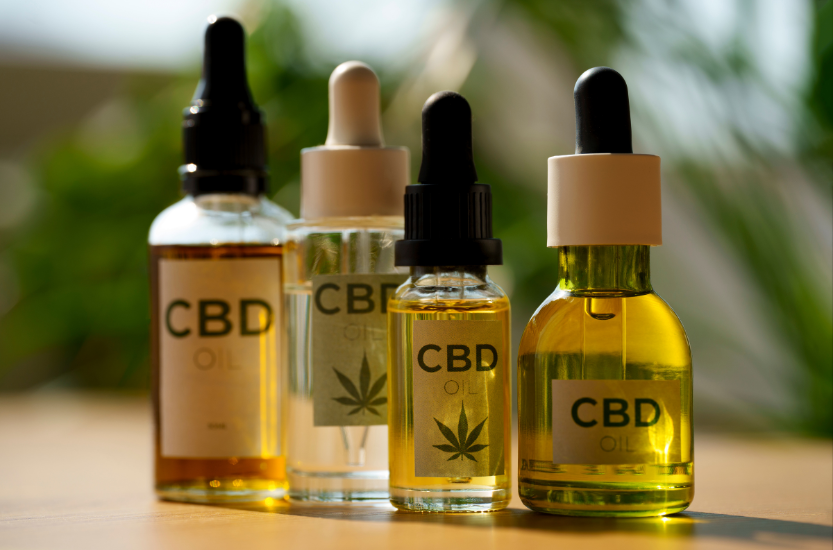
Cannabidiol (CBD) is the second major cannabinoid in cannabis. Unlike THC, it doesn’t bind directly to CB1 receptors and it doesn’t make you intoxicated. You can’t get high from CBD alone.
The World Health Organization reviewed CBD in 2018. Its drug experts found that pure CBD has no psychoactive properties and no potential for abuse or dependence, and recommended keeping it out of international drug control.
CBD works differently in the body. It acts on several systems at once, including serotonin receptors (5-HT1A) and TRPV1 channels, and it nudges the endocannabinoid system indirectly instead of switching it on.
The best evidence for CBD as a medicine is in epilepsy. The FDA approved Epidiolex, a purified CBD drug, for seizures in Lennox-Gastaut syndrome and Dravet syndrome. For anxiety and sleep, the evidence is promising but still early, and the doses used in studies are usually far higher than what’s in a typical CBD oil.
Does CBD Protect You From THC?
For years, the common belief was that CBD takes the edge off THC’s anxiety and paranoia. That’s part of why people say older, more balanced strains felt “mellower.”
A 2023 trial tested exactly that. Forty-six people inhaled cannabis with the same dose of THC and either no CBD or one, two or three times as much CBD. CBD didn’t reduce THC’s effects on memory or paranoia at any of those ratios. The researchers concluded that at the ratios most common in medical and recreational products, there was no sign CBD protects against THC’s short-term downsides.
What has changed for sure is the plant itself. As breeders pushed THC up, CBD in seized US cannabis fell to a fraction of a percent. More on this trend: Why Today’s Cannabis Is Stronger Than Ever.
The Key Practical Differences
Here’s how the two compare on the questions people actually ask:
THC vs CBD side by side
Question
THC
CBD
Gets you high?
Yes
No
Causes dependence?
Yes, it drives tolerance and withdrawal
No abuse or dependence potential found (WHO 2018)
How it works
Binds directly to CB1 receptors
Acts indirectly, on several receptor systems
Approved medicine
Marinol and Syndros (synthetic THC)
Epidiolex, for two rare forms of epilepsy
Drug tests
What standard tests look for
Pure CBD shouldn’t show up, but many products contain some THC
Legal status:THC laws vary a lot from place to place. CBD made from hemp is legal in much of Europe and the US as long as the THC content stays below the legal limit.
Drug tests: This is where people get caught out. When researchers tested 84 CBD products bought online, about 1 in 5 contained THC, and most labels got the CBD amount wrong. With daily use, those traces can add up. If you have a test coming up, this helps: How Long Does It Take to Become THC-Free After Quitting Weed?
CBD During Cannabis Withdrawal
Can CBD help when you quit? The honest answer: it might help a bit, but it’s no replacement. CBD doesn’t replace THC and it doesn’t prevent withdrawal.
There is one encouraging trial. In a 2020 study, people with cannabis use disorder who took 400 mg or 800 mg of CBD a day for four weeks used less cannabis than people on a placebo. That’s a high dose, given as a medicine in a study, not the few drops in a typical oil.
Some people find CBD takes the edge off the anxiety spike or the bad sleep of early withdrawal, and use it as a bridge for a few weeks. More detail: Using CBD to Quit Weed.
Knowing that THC is the part that hooked you makes the next step clearer. If you want a structured way through withdrawal, our Cannabis Detox Program walks you through it step by step.
Frequently Asked Questions
Will CBD get you high?
No. CBD doesn't bind to CB1 receptors in a way that makes you intoxicated. If a product sold as "CBD" gives you a noticeable high, it most likely contains a fair amount of THC, which is common with unregulated products.
Is CBD addictive?
Current evidence says no. The WHO found that pure CBD shows no potential for abuse or dependence. It doesn't hit the reward system the way THC does, and there are no recognized withdrawal symptoms when you stop CBD.
Does CBD cancel out the effects of THC?
Not at the ratios found in most products. In a 2023 trial, adding up to three times as much CBD as THC didn't reduce THC's effects on memory or paranoia.
Can CBD make you fail a drug test?
Pure CBD shouldn't. But many CBD products contain traces of THC. In one study of 84 products sold online, about 1 in 5 contained THC. With regular use, that can be enough for a positive test.
Should I use CBD to help quit weed?
It may help with specific symptoms, mainly anxiety and sleep, but it's not a substitute for THC and won't prevent withdrawal. If you find it genuinely useful during the transition, there's no reason not to use it. More context: Using CBD to Quit Weed.
Sabrina is the health coach of the QSW team. Like everyone on the team, Sabrina knows cannabis from personal experience and covers what your body goes through when you quit: sleep, sweating, appetite and recovery.
When people talk about what weed does to your brain, the conversation usually focuses on the damage side. What happens after is discussed much less, even…
We use cookies and similar technologies to store and access device information. By consenting, you allow us to process data such as browsing behavior or unique IDs on this site. Not consenting or withdrawing consent may negatively affect certain features and functions.
Functional
Always active
Storage or access is strictly necessary for the legitimate purpose of enabling the use of a specific service explicitly requested by the user, or for the sole purpose of carrying out the transmission of a communication over an electronic communications network.
Preferences
Storage or access is necessary for the legitimate purpose of storing preferences that were not requested by the subscriber or user.
Statistics
Storage or access used exclusively for statistical purposes.Storage or access used exclusively for anonymous statistical purposes. Without a subpoena, voluntary compliance by your internet service provider or additional records from a third party, information stored or retrieved for this purpose alone usually cannot be used to identify you.
Marketing
Storage or access is required to create user profiles, send advertising, or track the user across a website or across multiple websites for similar marketing purposes.