Does Quitting Weed Lower Blood Pressure? What Changes in Your Heart and Circulation
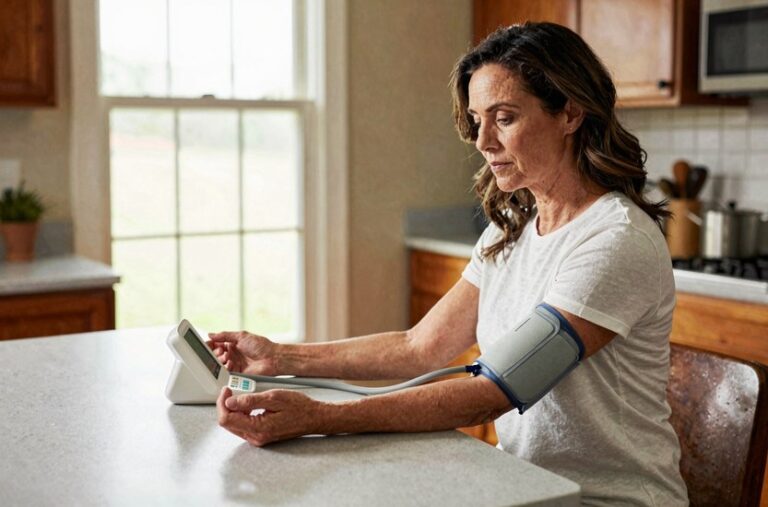
Day three. You're at the kitchen table with the cuff still on your arm, and the number is 148 over 94. Two weeks ago, still smoking...
Read more »



The short answer
Before checking any claim, you need to know which clock you’re on, because they run on different rules.
The first clock is withdrawal. For years your endocannabinoid system got THC from outside, so it cut back its own supply and thinned out its receptors. Take the THC away and for a while nothing is on the line. That’s the sweating, the 3 a.m. wake-ups, the appetite that vanishes, the short fuse.
It starts within a day or so and peaks around day three to six. Our Cannabis Detox Program calls this stretch the Release phase, and it’s the physically roughest part. What follows, from about day five into week three or four, is the Resilience phase, and it’s the part people underestimate. The sweating stops, but the mood swings, the flat evenings and the cravings run for weeks longer.
Not everyone gets hit equally. A 2020 meta-analysis of 47 studies in JAMA Network Open found a real withdrawal syndrome in 47 percent of regular users, so roughly half. The other half get off lighter, which is why the friend who “just stopped for a week” doesn’t believe you. The day-by-day version is in Weed Withdrawal Timeline: Day-by-Day Guide for Heavy Users.
The second clock is THC clearance, and this is the one a test cares about. THC dissolves in fat, not water. It doesn’t sit in your blood waiting to be rinsed. Within hours it moves into fat tissue and then leaks back out slowly, over weeks, while your liver turns it into THC-COOH, the breakdown product a urine test looks for.
Daily users commonly need three to six weeks to test clean. Heavy daily users with years behind them, two to three months, and the metabolite has been documented at 77 days.
The two clocks side by side
| Clock | Roughly how long |
|---|---|
| Withdrawal: Release phase | Day 1 to about day 5, peak around days 3 to 6 |
| Withdrawal: Resilience phase | Day 5 to about week 3 or 4 |
| Withdrawal: Clarity phase | Until about week 7 |
| THC clearance, occasional use | About a week |
| THC clearance, daily use | 3 to 6 weeks |
| THC clearance, years of heavy daily use | 2 to 3 months, documented up to 77 days |
Here’s why this matters for everything below: the withdrawal clock is mostly finished by the time the THC clock is halfway. Someone on r/leaves put both clocks in a single post on day 21: “Still not feeling 100%. Took a home THC test and the THC metabolites are still high in my system.”
And then: “It took 10 years to build up in my body. It’s going to take more than 21 days to get out of my body.” Past the worst of the withdrawal, nowhere near clean. Both true at once. Now the claims.
This is where everybody starts, because it’s free and it feels like doing something. The logic sounds fine: toxins, kidneys, flush. The problem is that THC isn’t in the watery part of you. It’s in the fat.
Drinking a gallon changes how much water passes through your kidneys and does nothing to how fast fat cells give up what they’re holding. The THC that was going to come out this week comes out this week either way.
What water does change is the concentration of what’s in your urine. That’s not nothing, and it’s exactly why the dilution trick exists. Urine that’s mostly water has less THC-COOH per milliliter, and if that drops under the cutoff, the strip reads negative.
The catch is that labs know this better than you do. They measure creatinine and specific gravity, and a sample that’s too watery comes back “dilute,” which at many employers counts as a fail or a retest. A heavy user on r/trees with three days to go was told exactly that by someone who’d tried it: “Careful drinking a ton of water. If the urine sample is too diluted it’ll be invalid and some places might treat that as a fail.”
Verdict: water does not speed up a weed detox. It helps you feel less like garbage during withdrawal, especially with the sweating, and that’s the honest reason to drink it. As a way of getting THC out faster, it’s a rounding error.
The sauna one has real believers, and you can see why. Day six on r/leaves: “It felt like my brain was a sponge and someone took it and squeezed out the thc juice and now I feel so much clearer.” That feeling is real. What’s producing it is not what he thinks.
Sweat carries a trace of THC, enough that sweat-patch testing exists, but the amount is tiny next to what your liver processes in the same hour. A sauna session doesn’t drain the fat stores. It drains you of water and salt, pushes your heart rate up, and, for a lot of people in week one, gives the night sweats somewhere to go during the day.
That’s a comfort effect, and comfort in week one is worth something. It’s just not clearance. Someone in the same thread said the quiet part: “100% agree on the benefits of a sauna but it’s kinda dangerous to spend an hour straight in there, no?” On day six, dehydrated and underfed, yes.
Cardio is the more interesting claim, because it’s half right, and the wrong half is the one people act on. THC is stored in fat. Exercise burns fat. So exercise releases THC. All true.
Researchers in Sydney put fourteen regular cannabis users on a stationary bike for 35 minutes and drew blood before and after: plasma THC went up. The rise was small, but it was there, along with the free fatty acids that show fat being broken down, and it was bigger in people with a higher body mass index. The THC came out of the fat, exactly as the theory says. And then it was in the blood.
Read that again with a test on Wednesday in mind. The morning-of run that’s supposed to “burn it out” moves stored THC into your blood, where your liver turns it into the exact compound the test is looking for.
Going hungry may do something similar. The same team had already shown in rats that a day without food pushes stored THC back into the blood. In the human study, one overnight fast on its own didn’t move the numbers, which the authors put down to the fast being short. So the honest version: a hard run before the test measurably works against you, and crash-dieting on top of it is a gamble in the wrong direction.
Over months, the picture flips. Steady training changes body composition, less fat means less storage, and that is part of why lean people test clean sooner. But it’s slow. “I have low body fat, and it took me 2 months to get clean with an extreme diet and exercise plan,” one person wrote to the guy asking about three days. Two months, extreme, and lean to begin with. That’s what “exercise speeds it up” looks like in real life.
Verdict: sauna is comfort, not clearance. Cardio in the last days before a test works against you. Cardio over months helps a little, and mostly for a different reason we’ll get to.
Water, sauna and cardio, checked
| Claim | What it actually does to THC |
|---|---|
| Lots of water | Dilutes your urine, doesn’t move THC out of fat |
| Sauna | Sweat carries only a trace of THC |
| Cardio right before a test | Small rise of THC in the blood |
| Cardio over months | Less body fat means less storage, but slowly |
These belong together because they share a mechanism, which is that they don’t have one.
Niacin is vitamin B3. The internet story is that it “opens up” fat cells and flushes them, and it has been repeated for twenty years without a single study behind it. What exists instead is a case series in Annals of Emergency Medicine: four people who took niacin to beat a urine screen, two with skin reactions, two with liver injury, metabolic acidosis, and blood sugar swinging both ways.
A later report describes a 23-year-old who took around 22 grams over two days before a pre-employment test and ended up on a ventilator and dialysis. He recovered. The test had stopped being the point. If you take one thing from this article: not niacin.
Cranberry juice is a mild diuretic with antioxidants, and neither of those touches fat tissue. It’s water with a story. It’s on every list because it’s on every list.
Detox drinks, the Q-Carbo and Rescue Cleanse kind, deserve their own article. The short version for now: they’re a large volume of fluid plus B vitamins and creatine, which is the dilution trick with the color and creatinine put back so the lab doesn’t flag it.
Some people pass with them, some fail with a “dilute” result, and nobody’s THC left their body one hour sooner. One r/trees reply summed up the failure mode: “Detox drinks show up as diluted which is an automatic fail.”
Verdict: niacin is dangerous, cranberry is decorative, and detox drinks are dilution with better packaging.

Free E-Book
You want to quit weed, but it feels impossible to actually stop?
Our free e-book shows you why willpower is a lie and the exact steps you need to quit for good. Enter your email below and we’ll send it to you for free.
So what’s left? Less than the lists promise, and more than nothing. You can’t hurry the THC clock in any way that matters. You can make the withdrawal clock far more bearable, and you can stop making the THC clock worse. Those are the real jobs.
Time is the ingredient. If you’re on the test clock, the number that decides your result is days since your last use, and it was set before you opened this tab. Count them honestly. Occasional use, about a week. Daily, three to six weeks. Years of daily, two to three months.
If Wednesday falls inside that window, no amount of water changes the math, and knowing that today is better than finding out at the lab. The r/trees poster with a decade of daily use and a two-week deadline came back to his own thread with a dollar-store strip: “just did a dollar tree test and got a very faint negative line.” A faint negative at two weeks, at 140 pounds, is possible. It’s also a coin flip, and he knew it.
Test, don’t guess. Home strips exist for exactly this, and they’re the only way to know which week you’re actually in. Not daily: in the first week you’re positive, and staring at that line tells you nothing. Start around day ten to fourteen, then once a week. How to read a faint line and when a lab cutoff differs from the strip’s is covered in THC Drug Test During Cannabis Detox: When to Test and What to Expect.
Sleep is the withdrawal detox. Most of what feels like “still detoxing” on day ten is a brain that hasn’t had proper dream sleep in years and is catching up hard. You can’t force it, but you can stop fighting it: same bedtime every night, dark room, phone outside the bedroom, and no alcohol to knock yourself out, because that pushes the rebound further down the road.
We’ve been through this ourselves. The nights are the part nobody warns you about, and they do turn, usually somewhere in week two or three.
Eat, especially when you don’t want to. Appetite disappears in week one and people quietly stop eating. That’s the one “detox hack” that backfires twice. An underfed body is more irritable and sleeps worse, and, by the same fat-release logic as exercise, going without food is at least suspected of nudging stored THC back into your blood. Small meals, protein, something warm. Not a diet. Three weeks from now is when you change your diet.
Move, for a different reason than you think. Exercise doesn’t clear THC faster in any timeframe that helps you. What it does is cut cravings. In a small Vanderbilt pilot study, twelve cannabis-dependent adults who did ten half-hour treadmill sessions over two weeks roughly halved their daily use without being asked to cut down, and their craving scores dropped across every measure.
Joints per day in the Vanderbilt treadmill study
| Period | Joints per day |
|---|---|
| The week before the sessions | 5.9 |
| During the two weeks of treadmill sessions | 2.8 |
| The two weeks after the sessions ended | 4.1 |
That’s the real reason to run in week two. Not to sweat THC out, but because the hour after a run is the one hour of the day when the urge goes quiet. Skip it the morning of a test.
Supplements, honestly. Magnesium and melatonin have a real place in the first weeks, for the sleep and the jangled nerves. Detox capsules are a separate question. We’ve looked at BeFox Detox and what the mineral-surplus idea can and can’t do. The fair summary is that it may take days off the clearance window, not weeks, and it does nothing for a test this Wednesday.
The full picture is in Cannabis Detox Capsules: Do They Actually Speed Up THC Clearance?. If you’re on a three-month timeline, it’s worth reading. If you’re on a three-day one, it isn’t. For everything else that helps during withdrawal, symptom by symptom: What Helps With Weed Withdrawal? The Most Effective Remedies.
And if you’re on the withdrawal clock with no test in sight, the highest-value thing you can do at home isn’t in your kitchen or your gym. It’s the three days before you quit: a date, the supply gone, and a plan for the evening slot where you always smoked. That’s laid out in Prepare for Cannabis Detox the Right Way, and it does more for week one than every item on the flush list combined.
How to detox from weed at home comes down to one uncomfortable fact and two useful ones. The uncomfortable one: the THC leaves on its own schedule, and the only thing that reliably moves that schedule is the date of your last use.
The useful ones: almost everything on the flush list either does nothing or works against you. And the things that do help, sleep, food, movement and a plan for the evenings, aren’t detox tricks at all. They’re how you get through the weeks the THC needs anyway.
Once the first weeks are behind you, the next job is not going back: How to Stay Clean from Weed After Quitting.
If you’d rather not get through the Release, Resilience and Clarity phases alone, our Cannabis Detox Program walks you through all three, at home, one day at a time.

About the author
Maik R. · Copywriter, QSW Team
Maik smoked weed daily for more than 12 years before getting clean with the support of an addiction counseling service, where he later worked himself. Today he writes for quit-smoking-weed.com from abroad, combining lived experience with careful research on withdrawal and life after weed.
More about Maik →Day three. You're at the kitchen table with the cuff still on your arm, and the number is 148 over 94. Two weeks ago, still smoking...
Read more »
You expected the irritability. You braced for the bad sleep. But the stomach stuff catches a lot of people off guard. You stop smoking and suddenly...
Read more »
You've been doing fine. Then you walk into your kitchen on a Thursday evening, sit in the same chair you always sat in, and suddenly it...
Read more »