
What Counts as Heavy Weed Use? Where the Line Actually Is
You probably typed this with a number already in your head. An eighth a week. A gram a day. One cartridge every ten days. And somewhere...
Read more »

Start the test
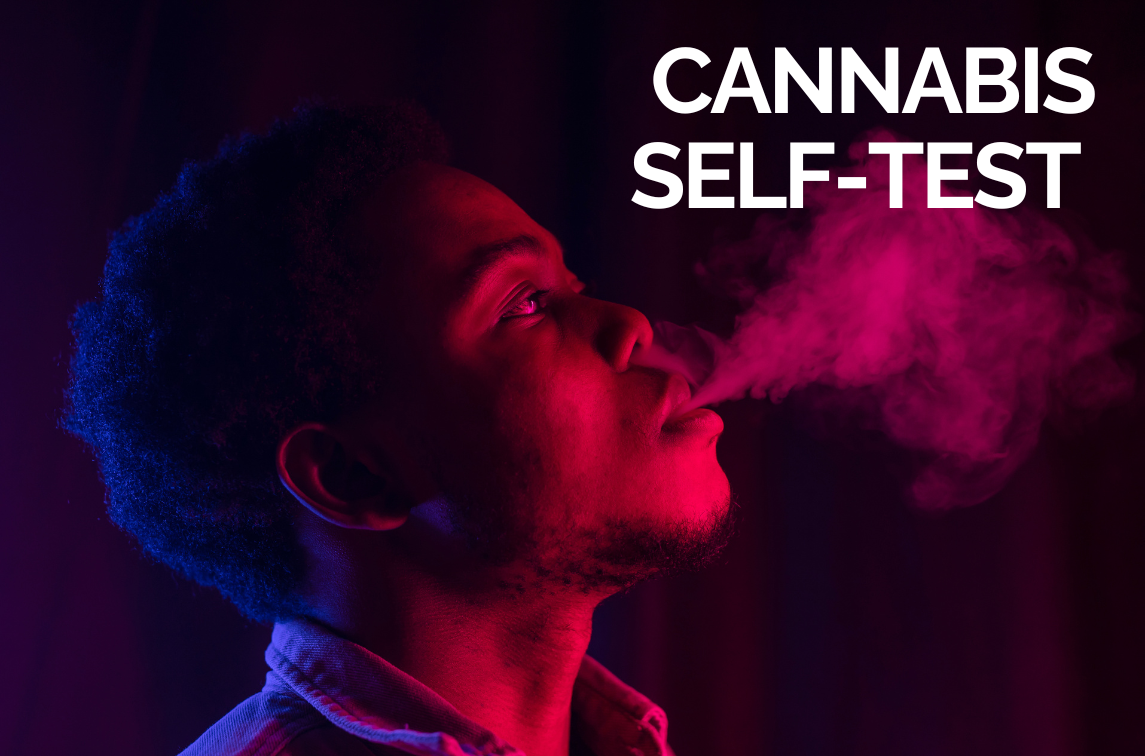
20 questions, answered honestly. Then you know where your use actually stands.
Looking at your answers …
Free e-book
Why willpower is not the missing piece, what pulls you back and how to make it stick this time.
No spam, unsubscribe any time.
You’ve completed the test. That’s already a major step. Your score is not a judgment. It’s a guide to what role cannabis plays in your life right now.
Your score runs from 0 to 20. Take a moment to look at your result honestly.
The three score bands
| Score | Band | What it suggests |
|---|---|---|
| 0 to 5 | Conscious approach | Use seems controlled, few limits in daily life |
| 6 to 12 | Warning signs | Patterns are forming that could become a problem |
| 13 to 20 | Clear call for change | Cannabis has a dominant influence on your life |
Here is what each band means in more detail.
Your use currently seems controlled and without major limits in daily life. You appear to be able to fit cannabis into your life consciously and without big issues.
What this means:
Tip: Stay mindful. A conscious approach helps you keep this level of control in the long run.
Your score suggests that certain patterns may be developing that could become a problem over time. Cannabis might have become a more regular part of your day than you realized. You are far from alone, since daily cannabis use beats daily drinking in the US now.
What this means:
This middle band gets waved away most easily. Nothing has visibly gone wrong yet, so a small drop in motivation tends to get blamed on the boss or the winter, even though this is the stage where change is still cheap.
Tip: Right now is a good time to pause and question your habits. Small changes today can make a big difference.
Your score suggests that cannabis currently has a dominant influence on your life. At this stage, using often becomes a deep habit that affects your energy and self-confidence.
What this means:
This is your wake-up call. You don’t have to do this alone. Support can help you break the cycle and find yourself again. If you need more reasons, start with 100 reasons to stop smoking.
Not sure where to start? Our guide on how to stop smoking weed covers practical first steps.
This is a self-check, not a diagnosis. It shows you a pattern, and only you know how honest your answers were.
Thinking it over alone rarely settles the question, because the judge and the defense attorney are the same person. Fixed questions cannot be swapped for easier ones halfway through, and an answer cannot be renegotiated once it is given.
Doctors use a fixed set of criteria for cannabis use disorder, like using more than you planned, failed attempts to cut back, cravings, and needing more to get the same effect. The CDC estimates that about 3 in 10 people who use cannabis have cannabis use disorder, and the risk is higher for people who start young and use often.
If you mainly want to know whether your amount counts as a lot, this article goes into it: What Counts as Heavy Weed Use?
Free E-Book
You want to quit weed, but it feels impossible to actually stop?
Our free e-book shows you why willpower is a lie and the exact steps you need to quit for good. Enter your email below and we’ll send it to you for free.
Quitting is often harder than people first expect, and there is a psychological reason for that. Over time, cannabis stops being just a “habit” and starts taking over specific jobs in your life.
It becomes your tool for calming down, numbing stress, or escaping uncomfortable thoughts.
Every job cannabis takes over is one that stops being handled any other way, so the person’s own ways of coping get used less and can slowly weaken.
If you try to quit by willpower alone without understanding why you can’t stop smoking weed, it’s very easy to fall back into the same old routine. True freedom doesn’t come from just “not smoking”. It comes from outgrowing the need for it.
Our System for Your Freedom
That’s exactly why we built a structured online program. We don’t just tell you to stop. We give you the tools to rebuild your life from the ground up.
What you will achieve with our program:
If your self-test showed you that cannabis has more influence on your life than you’d like, you don’t have to figure this out by yourself. Our Cannabis Detox Program takes you through the first weeks step by step.

About the author
Melli I. · Copywriter, QSW Team
Melli started smoking weed at 13 and quit for good three years ago, at 25. On quit-smoking-weed.com she shares her own experience and writes carefully researched articles about withdrawal, cravings and staying clean.
More about Melli →You probably typed this with a number already in your head. An eighth a week. A gram a day. One cartridge every ten days. And somewhere...
Read more »
Cannabis is often associated with better sex: more relaxation, stronger sensations, deeper connection. Many people say sex feels more intense when they're…
Read more »
My partner smokes weed and I am losing them. Which conversations help, which backfire, where to set limits, and when to decide for yourself.
Read more »