
Signs of Pot Use: What Parents and Partners Actually Notice
You are standing in the doorway of a bedroom with a laundry basket on your hip, and something in the air is not right. Or you...
Read more »


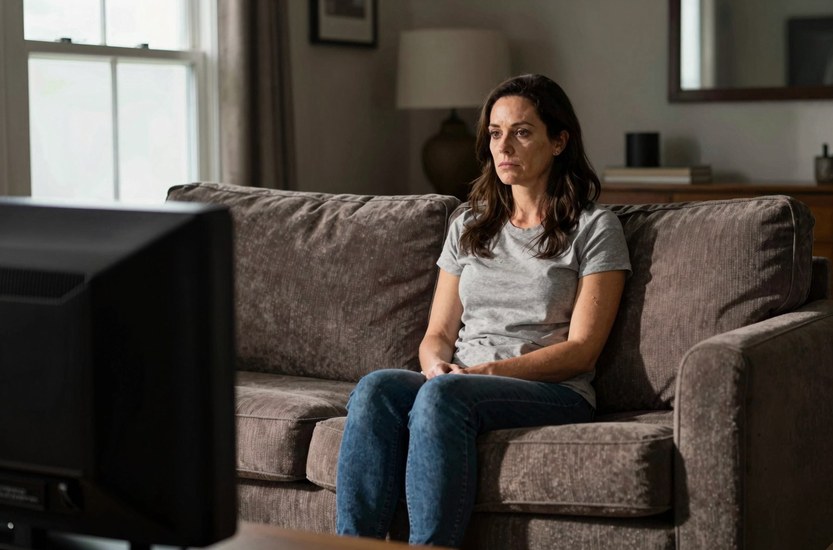

The 8 patterns at a glance
Cannabis has an odd public image. With alcohol, the outward signs are usually unmistakable. Cannabis runs invisibly through a lot of relationships.
Your partner is not loud. They do not stumble. They do not make scenes. They are just, at some point, not quite there.
That invisibility is what makes it so hard to name. Say “you are not present” and it sounds like a mood. Say “you smoke too much” and it sounds like a charge. Say nothing and you get used to the distance and slowly forget what closeness felt like.
The aim here is not to put anyone in a box. It is to give you a way to place what you are seeing, so you stop assuming you are the only person who finds it hard. If the person you worry about is a friend rather than a partner, start with talking to a friend who smokes too much.
These come up again and again in conversations with partners of users. Not every one fits every person. In most relationships with regular use you will recognize three to five.
From around 9pm a kind of preparation starts. They go quieter, they withdraw, they step out “for a minute” or go upstairs. Once you have noticed it, you see it every night. It is not tiredness, it is getting ready for the ritual.
What you notice: conversations between 9 and 10pm feel heavier than between 7 and 8. Important subjects have to be raised earlier, or they do not get raised at all.
They are there, but not fully. During a film they laugh in the right places but rarely comment. In conversation they nod without asking anything back. In an argument the reaction comes delayed, sometimes days later.
That is not malice. Their reward system is dampened, and what wants to land emotionally lands more quietly on their side. Studies back this up: regular users show a weaker response in the brain’s reward center, and flatter emotional reactions to stress.
Weekends get less spontaneous. Trips get discussed and rarely booked. Hobbies from a few years ago fall asleep without any clear moment of giving up.
What you see: you do what they suggest, and their suggestions have been similar for months or years. The spontaneity from the early days of the relationship is gone, and nobody ever decided that.
They will tell you what happened at work. They answer concrete questions. But conversations about the relationship, about the two of you, about what is running under the surface, happen less and less. When they start, they get ended rather than deepened.
This is not “they do not love me any more”. It is that the energy for that kind of conversation is not available. Desire can fade for the same reason, and weed’s effect on libido explains the link.
How the deeper conversations disappear
Things that used to bother them do not any more. A job that is fine. A home that is fine. A weekend that is fine.
From the outside it can look like contentment. From the inside of the relationship it feels like the ambition left the room.
Appointments in the morning become a problem. Getting going takes longer. Anything that requires being sharp gets scheduled into the afternoon, and eventually gets avoided.
For you this often means the mornings belong to you alone. The early starts you used to share quietly drop off the calendar.
Not necessarily large sums, but a steady stream that never quite gets explained. If you ask about it directly, you get defensiveness instead of an answer.
Daily use costs money every week, and it adds up over a year. Often it’s the defensiveness, more than the amount, that tells you something has changed.
Appointments, plans, birthdays, decisions. Not because you like it, but because it stopped happening otherwise.
It creeps in. Each time you take over one more thing, it’s because that was easier than waiting. This is the pattern most partners recognize last and resent most.
Free E-Book
You want to quit weed, but it feels impossible to actually stop?
Our free e-book shows you why willpower is a lie and the exact steps you need to quit for good. Enter your email below and we’ll send it to you for free.
The temptation is to present the list. Do not. A list reads as evidence in a trial, and people defend themselves against evidence.
Pick one pattern, the one that costs you most, and describe one specific instance of it. “Last Sunday I suggested going to the coast and we ended up not going, and I noticed I have stopped suggesting things.”
That is hard to argue with, because it is about you and about one afternoon, not about their character.
The fuller version of that conversation, including the openings that reliably backfire, is here: my partner smokes weed, what to do.
Patterns are not a diagnosis. What separates heavy use from dependency is whether they are okay without it: daily use, morning use, irritability when there is none, commitments sliding, and attempts to cut down that last a few days at most.
The signs in full: Cannabis Use Disorder: Signs and Symptoms
If the defensiveness ever turns into threats, pushing or hitting, you don’t have to handle that alone. Call the National Domestic Violence Hotline at 1-800-799-7233, or 911 if you are in danger right now. If you or your partner are in a mental health crisis, call or text 988.
The patterns above are not proof that your relationship is over. They are a vocabulary. Most partners spend years without one, which is why the conversation never happens.
You do not need all eight. You need one honest sentence about one of them, said at a time when nobody is high and nothing is on fire.
And if your partner answers that they’d like to cut back or stop, you can point them to a concrete next step: our Cannabis Detox Program walks them through the first weeks off weed, one phase at a time.

About the author
Maik R. · Copywriter, QSW Team
Maik smoked weed daily for more than 12 years before getting clean with the support of an addiction counseling service, where he later worked himself. Today he writes for quit-smoking-weed.com from abroad, combining lived experience with careful research on withdrawal and life after weed.
More about Maik →You are standing in the doorway of a bedroom with a laundry basket on your hip, and something in the air is not right. Or you...
Read more »
How do you help someone quit weed without sliding into a role that drains you both? Almost everyone close to a heavy user asks that at...
Read more »
Smoking weed at 16 is a different subject from smoking weed at 30. Not because teenagers are worse people, and not because one joint ruins a...
Read more »