How to Detox From Weed at Home: What Actually Speeds It Up (and What Does Not)
It's Sunday night. The offer letter came Friday, the screening is Wednesday, and you've had the same tab open for an hour: how to detox from...
Read more »


The short answer
THC works on your endocannabinoid system, and that system also helps control your body temperature. With daily use, your body partly hands that job over to THC.
Take THC away suddenly and your temperature control has to recalibrate. For a while it runs hotter, less stable and less predictable.
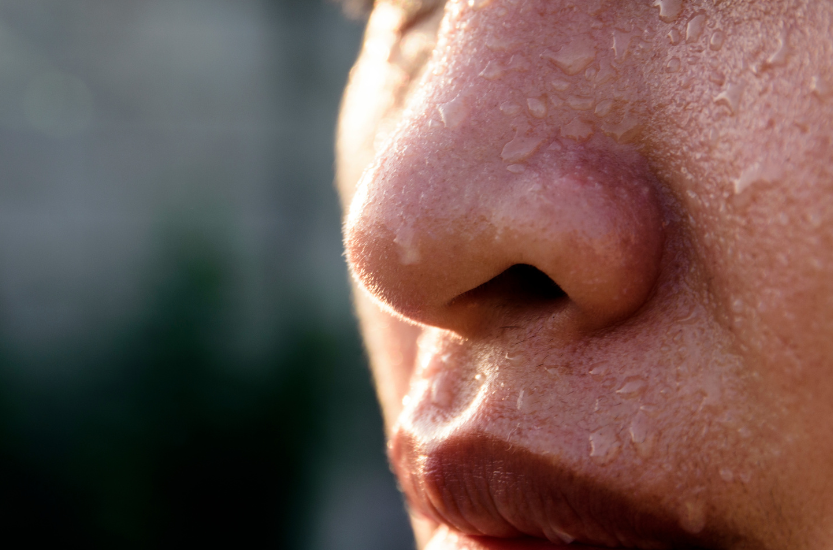
On top of that, withdrawal puts your nervous system on alert. Higher anxiety, a faster heart rate and a body in stress mode all make heat. Your body gets rid of that heat by sweating, which is the right response. The problem is just how much and when.
That’s why sweating is one of the physical symptoms in the official criteria for cannabis withdrawal, next to chills, shakiness, headaches and stomach pain.
The heaviest sweating usually happens at night. Your body does its deepest temperature control during sleep, and that’s where the missing THC shows most.
The typical night: you wake at 2 or 3am, the sheets are damp, you feel hot and a bit anxious. It’s a withdrawal reaction in the middle of what should be your deepest sleep. It breaks up your sleep, and broken sleep makes everything else feel worse.
We’ve been there: those first-week nights where you change shirts at 3am and lie there waiting for it to pass. It does pass. Usually within the first two weeks, though for heavy long-term users it can stretch into week three.
Night sweats and sleep problems feed each other. When you quit, REM sleep rebounds hard, so your sleep is lighter and you wake up more often.
Then you wake up damp, sometimes cold, with your nervous system already running high, and getting back to sleep is hard. One broken night turns into three, and by the end of the first week everything else feels heavier.
That isn’t a reason to go back to smoking. It’s a reason to set up your bedroom before the bad nights come: a cool room, a dry shirt and a towel next to the bed, water within reach.
More on the sleep side: Weed Withdrawal Insomnia: What’s Happening and What Actually Helps
Some people get cold sweats instead: clammy skin and chills, even though they don’t feel hot. This is common in withdrawal too, and it comes from the same stress mode in your nervous system.
That system controls both sweating and how wide your blood vessels open. When it runs in stress mode, you can sweat even while you’re cold.
Cold sweats show up more during the day and in the first few days. Hot night sweats tend to last a bit longer. Both are part of the same process and clear up on the same timeline.
The pattern is fairly consistent across daily users, and it follows the rest of physical withdrawal. In our Cannabis Detox Program we split withdrawal into three phases: Release from day 1 to about day 5, Resilience from day 5 to about week 3 or 4, and Clarity until about week 7.
Here is where the sweating usually sits in each one.
Withdrawal sweating across the three phases
The short second wave in week two often comes along with other symptoms flaring up for a few days. It’s part of the same process, not a step back.
For how sweating fits into the full withdrawal picture: Weed Withdrawal Timeline: Day-by-Day Guide
Free E-Book
You want to quit weed, but it feels impossible to actually stop?
Our free e-book shows you why willpower is a lie and the exact steps you need to quit for good. Enter your email below and we’ll send it to you for free.
A fan, a lower thermostat or an open window takes a lot of the intensity out of night sweats. Around 65 to 68°F (18 to 20°C) is a good target.
Temperature is the most direct lever you have. Light, breathable bedding matters more than most people expect.
Sweating more means losing more fluid and electrolytes. Drink water through the day, not just when you’re thirsty. Losing fluid is also one of the main triggers for headaches when you quit weed.
If the sweating is heavy, an electrolyte drink in the morning helps replace what you lost overnight.
Moisture-wicking fabrics make a real difference. Skip anything that traps heat.
Keep a spare dry set next to the bed. That removes one more obstacle to getting back to sleep after a night sweat.
Taken before bed, it supports sleep quality and calms some of the nervous system overdrive behind both the sweating and the wake-ups.
It’s one of the more useful supplements during the physical phase of withdrawal.
Both raise your body temperature and disturb your sleep.
Your sleep is already fragile during withdrawal, so there’s no need to add to it.
Exercise helps your nervous system settle and improves sleep.
Late in the evening, though, it raises your core temperature and can make night sweats worse.
Withdrawal sweating is unpleasant, not dangerous. A few situations are worth getting checked out: sweating so severe that you can’t sleep at all for several nights in a row, a fever above 101°F (38.5°C) along with the sweating, or no improvement at all after three weeks.
Also get checked if night sweats come with unexplained weight loss or swollen lymph nodes, or if they are still heavy after four to six weeks. Then something other than quitting weed may be behind them.
These cases are uncommon. For the vast majority of people, withdrawal sweating is just an unpleasant physical phase.
For everything else happening in withdrawal alongside the sweating: Weed Withdrawal Symptoms: What to Expect and Why It Happens
Withdrawal sweating is your temperature control recalibrating after years of running partly on THC. It peaks in the first week and for most people is gone within two to three. The nights are the hardest part.
If you want a structured way through all three phases (Release, Resilience and Clarity), our Cannabis Detox Program is built around exactly that.

About the author
Sabrina S. · Health Coach, QSW Team
Sabrina is the health coach of the QSW team. Like everyone on the team, Sabrina knows cannabis from personal experience and covers what your body goes through when you quit: sleep, sweating, appetite and recovery.
More about Sabrina →It's Sunday night. The offer letter came Friday, the screening is Wednesday, and you've had the same tab open for an hour: how to detox from...
Read more »
Day three. You're at the kitchen table with the cuff still on your arm, and the number is 148 over 94. Two weeks ago, still smoking...
Read more »
You expected the irritability. You braced for the bad sleep. But the stomach stuff catches a lot of people off guard. You stop smoking and suddenly...
Read more »